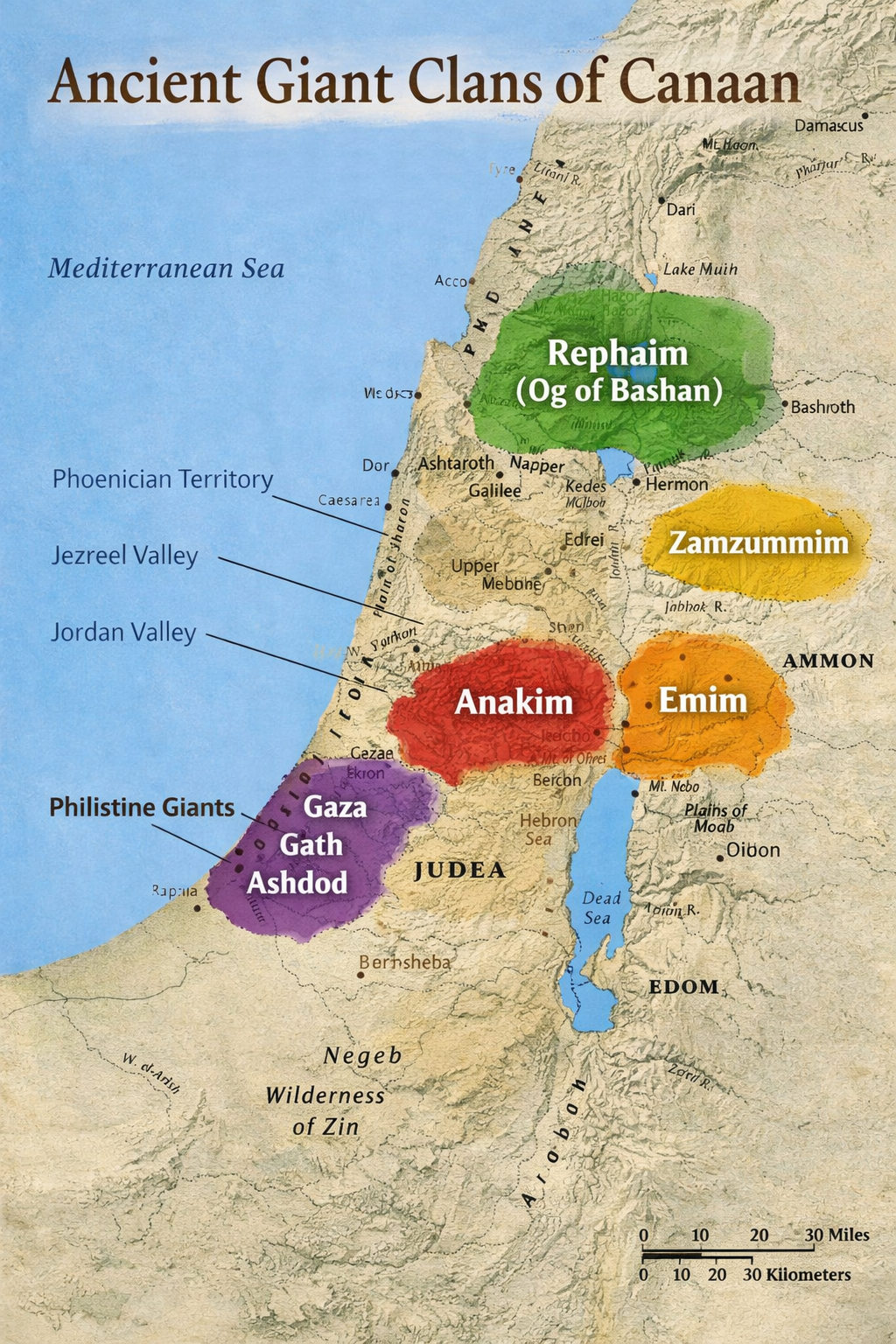
The Bible presents two major stages in the appearance of giants:
- Before the Flood — the Nephilim (Genesis 6)
- After the Flood — the Anakim, Rephaim, and related giant clans (Numbers, Deuteronomy, Joshua, Samuel)
These two stages are connected by the larger spiritual theme of the seed war (Genesis 3:15).
1. 🌑 Before the Flood — The Genesis 6 Event
A. The “sons of God”
The phrase sons of God (bene ha’elohim) appears in:
- Job 1:6
- Job 2:1
- Job 38:7
In all three places, it refers to heavenly beings, not humans.
Genesis 6:1–4 describes:
- The sons of God taking human women
- Producing Nephilim
- A surge of violence and corruption
- God responding with the Flood
B. The Nephilim
The Nephilim are described as:
- “mighty men of old”
- “men of renown”
- unusually violent
Their existence is tied to a moment of extreme moral corruption.
C. The spiritual meaning
Genesis 6 is an early attempt to corrupt humanity, threatening the line through which the Messiah would come.
This is part of the seed war of Genesis 3:15:
- The serpent’s “seed” opposes God’s plan
- The woman’s “seed” leads to Christ
The Nephilim represent a pre‑Flood climax of rebellion.
2. 🌈 After the Flood — The Giant Clans Return
This is the part many Christians overlook.
Genesis 6:4 says:
“The Nephilim were on the earth in those days and also afterward.”
This prepares the reader for the reappearance of giant peoples after the Flood.
A. The major giant clans
These include:
- Anakim — “sons of Anak,” tall warriors in Canaan
- Rephaim — a broad category including Og of Bashan
- Emim — feared giants in Moab
- Zamzummim — giants in Ammon
- Giants of Gath — Goliath and his kin
B. Why they appear again
Scripture does not say the Nephilim survived the Flood. Instead, it shows giant clans arising again in specific regions.
The Bible’s emphasis is not on biology — it is on spiritual opposition.
These giant peoples:
- Occupy strategic covenant‑promise lands
- Intimidate God’s people
- Represent entrenched rebellion
- Continue the serpent’s hostile “seed” theme
C. The Anakim and Rephaim as spiritual symbols
When Israel spies the land (Numbers 13–14), they see the Anakim and say:
“We are like grasshoppers.”
This is fear speaking the serpent’s language.
God responds:
“Do not fear them… the Lord is with you.”
The giant clans become living parables of intimidation, unbelief, and spiritual resistance.
3. 🗡️ David and the Giants — A Turning Point in the Seed War
David is the anointed king through whom the Messiah’s line continues.
Goliath is a descendant of the Rephaim — a remnant of the ancient giant clans.
David’s victory is:
- Historical
- Symbolic
- Prophetic
It foreshadows Christ’s triumph over:
- Sin
- Death
- Satan
The four giants slain later (2 Samuel 21; 1 Chronicles 20)
All descended from Rapha:
- Ishbi-Benob
- Saph
- Lahmi
- The six‑fingered giant
All fall to David and his men — showing the maturing strength of God’s people.
4. 🌾 Putting It All Together
Before the Flood, the giants (Nephilim) arose from a rebellion involving the “sons of God” and human women, representing a direct spiritual attack on God’s plan for humanity.
After the Flood, giant clans reappeared (Anakim, Rephaim, Emim, Zamzummim, giants of Gath). Scripture presents them as unusually bold, intimidating enemies who oppose God’s people at key covenant moments.
These post‑Flood giants are not the same individuals as the Nephilim, but they continue the same spiritual pattern — the serpent’s hostile “seed” resisting God’s purposes.
David’s victories over Goliath and the other giants foreshadow Christ’s ultimate triumph over all spiritual opposition.
🗺️ Regions of Giant Occupation After the Flood
| Giant Clan | Primary Region | Key Biblical References | Notes |
|---|---|---|---|
| Anakim | Hebron, Debir, Anab (in Judea’s Central Highlands) | Numbers 13:22–33; Joshua 11:21–22 | “Sons of Anak” — tall warriors; remnants fled to Gaza, Gath, and Ashdod |
| Rephaim | Bashan (north of Gilead) | Deuteronomy 3:11; Joshua 12:4 | Includes Og of Bashan, whose bed measured 13 feet |
| Emim | Plains of Moab (east of the Dead Sea) | Deuteronomy 2:10–11 | Feared by Moabites; called “terrible ones” |
| Zamzummim | Territory of Ammon (northeast of Moab) | Deuteronomy 2:20–21 | Destroyed by the Ammonites; related to Rephaim |
| Philistine Giants | Gath, Ashdod, Gaza (coastal plain) | 1 Samuel 17; 2 Samuel 21 | Descendants of Rapha — Goliath and his kin |

Leave a Reply