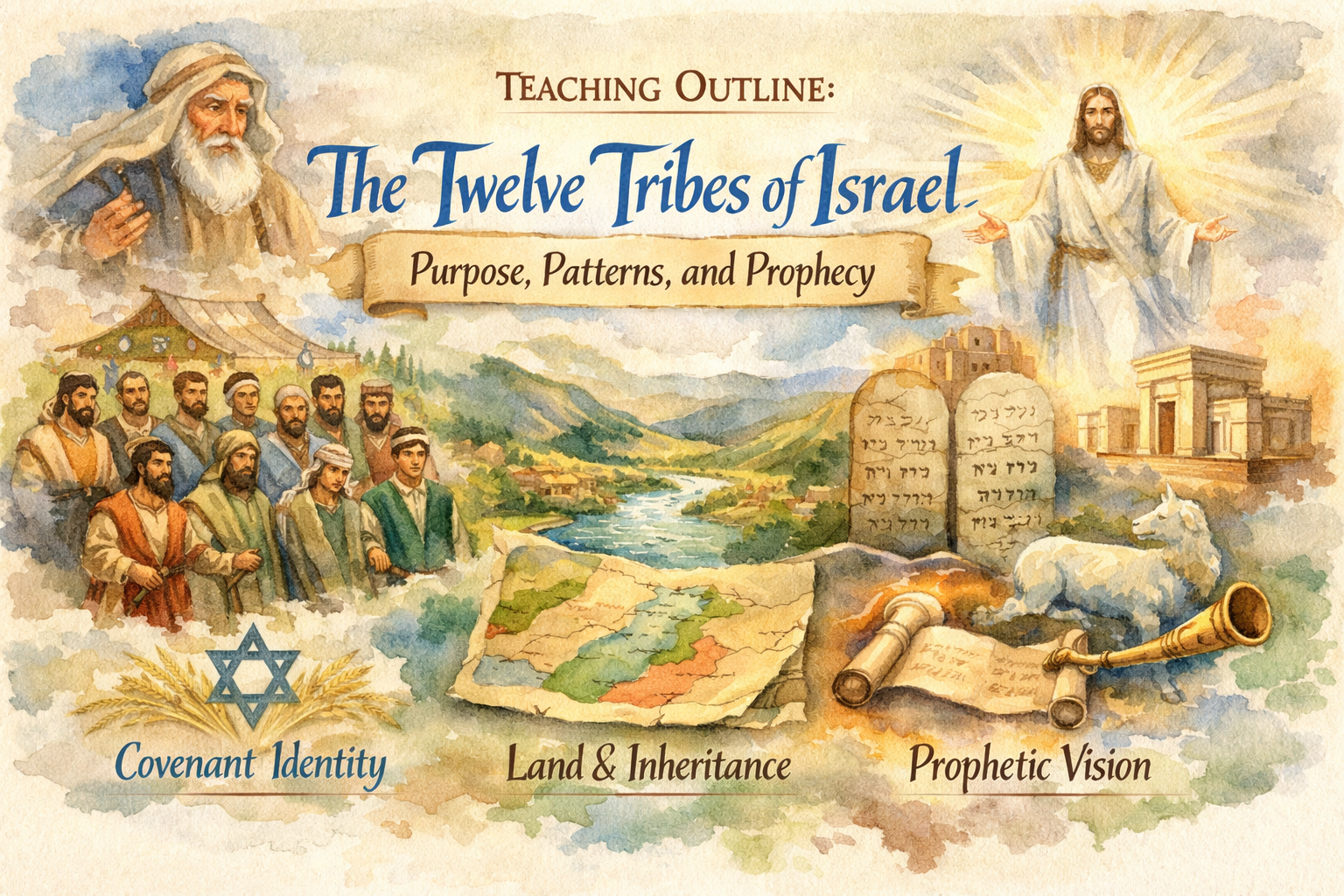
I. Introduction: Why the Tribal Lists Differ
- Biblical purpose — Each list reflects what God is emphasizing: lineage, land, leadership, or prophecy.
- Covenant identity — The tribes reveal how God forms a people for Himself.
- Symbolic meaning — Names, order, and inclusion/exclusion carry theological weight.
II. The Genesis List — The Biological Sons of Jacob
A. The Twelve Sons
B. Teaching Emphasis
- God builds His nation from ordinary, flawed people.
- The list shows family identity, not land or leadership.
- Joseph’s future double portion is hinted but not yet revealed.
III. The Land‑Inheritance Lists — Numbers & Joshua
A. The Territorial Tribes
- Reuben, Simeon, Judah, Issachar, Zebulun, Dan, Naphtali, Gad, Asher, Benjamin
- Ephraim and Manasseh replace Joseph.
B. Why Levi Is Excluded
- Levi is set apart for priestly service, not land.
- Their inheritance is the Lord Himself and the service of the sanctuary.
C. Teaching Emphasis
- God distributes land according to calling and purpose, not favoritism.
- Ephraim and Manasseh demonstrate fruitfulness and multiplication.
IV. The Revelation 7 List — The Prophetic Tribes
A. The Tribes Named
Judah, Reuben, Gad, Asher, Naphtali, Manasseh, Simeon, Levi, Issachar, Zebulun, Joseph, Benjamin.
B. What’s Different
- Judah first → Christ-centered ordering.
- Levi restored → priesthood fulfilled in Christ.
- Joseph included → Ephraim omitted.
- Dan missing → historically linked with idolatry.
C. Teaching Emphasis
- God seals a redeemed people, not a political nation.
- The list highlights worship, holiness, and Messiah’s supremacy.
V. Theological Themes Across All Lists
- Identity — God forms His people intentionally.
- Inheritance — Land, calling, and blessing differ by purpose.
- Holiness — Levi’s role shows God’s priority for worship.
- Judgment and mercy — Dan’s omission and Joseph’s restoration illustrate both.
- Messiah’s centrality — Judah’s prominence in Revelation points to Christ.
VI. Practical Applications for Today
- God assigns roles according to calling, not human hierarchy.
- Spiritual identity matters more than physical lineage.
- Christ reorganizes His people around Himself, not tradition.
- Believers are sealed and set apart, just as the tribes were.
