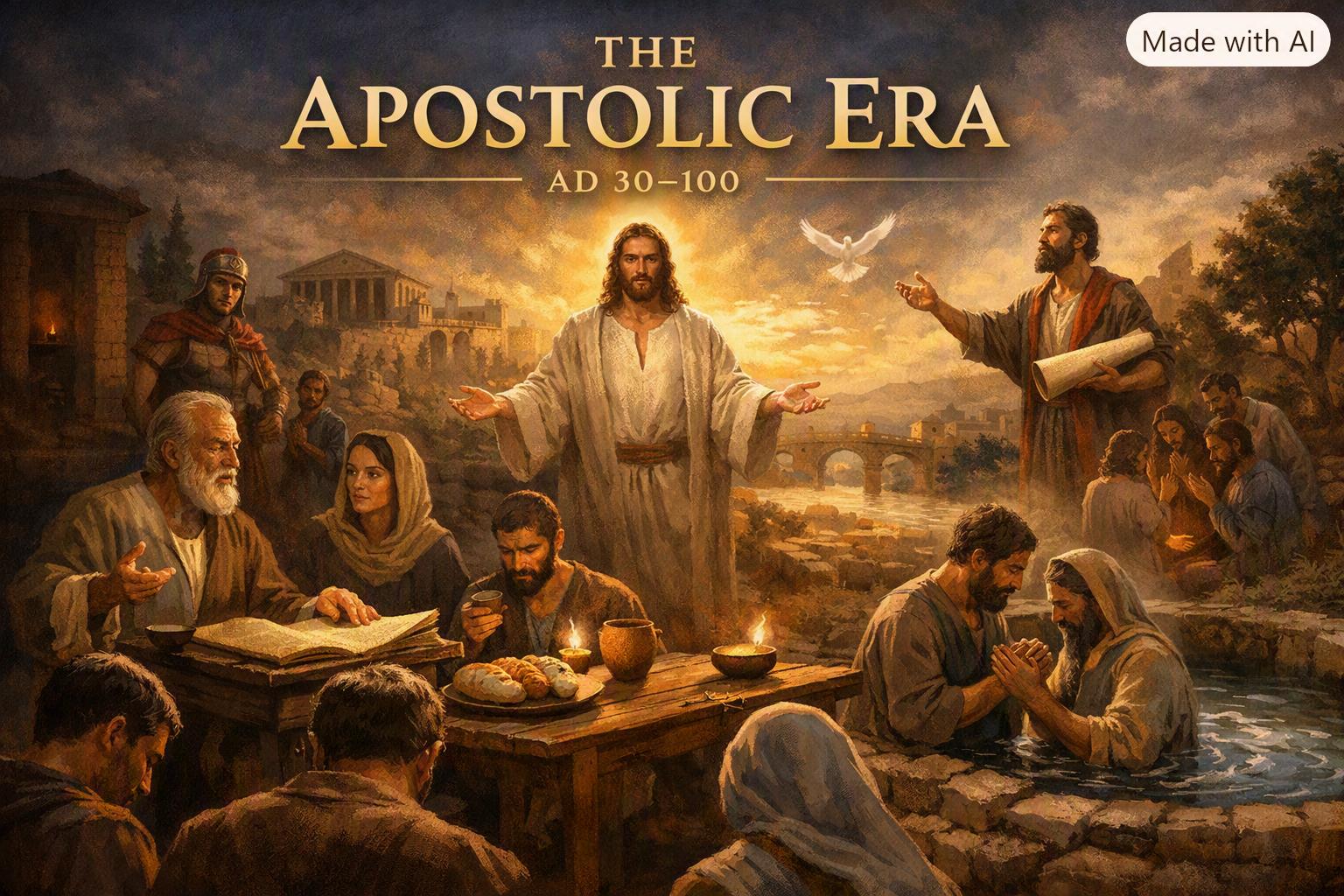
Apostolic Foundations (AD 30–100) is one of the richest and most misunderstood eras of Christian history. The key is that everything was lived before it was written, embodied before it was defined.
1. Apostolic Foundations (AD 30–100)
Core Reality of the Era
The most important takeaway is that the earliest Christians did not think of themselves as creating a new religion. They believed they were living within the story of Israel, now fulfilled in Jesus the Messiah. Everything unfolded inside Jewish worship rhythms, Scripture, and community life.
Expanded Doctrines & Practices Taking Shape
- Jesus as Messiah and risen Lord — The resurrection was the center of preaching. It wasn’t a doctrine debated; it was a reality proclaimed by eyewitnesses.
- Salvation through Christ — Early preaching emphasized repentance, forgiveness, and entering the kingdom of God through Jesus.
- Baptism and communion — Baptism marked entry into the community; communion was a shared meal remembering Jesus’ death and anticipating His return.
- Monotheism with Jesus included — The earliest Christians worshiped Jesus alongside the Father while reciting the Shema (“The Lord is one”). This lived worship is the seed of later Trinitarian doctrine.
- Emerging leadership — Elders shepherded local gatherings; deacons served practical needs. Leadership was relational, not institutional.
Why This Era Matters
1. Faith before formal theology
The earliest Christians did not produce doctrinal statements. They produced communities, worship, Scripture, and testimony. Doctrine later grew out of these lived realities.
2. Formation of the New Testament
The writings of Paul, Peter, John, James, and others circulated among churches. By the end of the century, many communities already recognized these writings as authoritative.
3. The church’s identity under pressure
Persecution was sporadic but real. Christians met in homes, gathered quietly, and relied on strong relational bonds. Their unity was rooted in shared suffering and shared hope.
4. The death of the apostles
With the death of John around AD 98/99, the church entered a new era. The generation that had seen Jesus and heard Him directly was gone. This transition forced the church to preserve teaching, confront false ideas, and articulate what had always been believed.
Key Themes
- Jewish-Christian continuity — Early believers attended synagogue, kept feasts, and prayed the Psalms.
- House churches — No buildings, no clergy class, no formal liturgy. Worship was simple, joyful, and communal.
- Missionary movement — The gospel spread through ordinary travel, trade routes, and personal relationships.
- Signs and wonders — Healing, prophecy, and spiritual gifts were common and expected.
- Suffering and witness — Martyrdom accounts begin here, shaping Christian courage and identity.
What This Era Feels Like
If you were to step into a Christian gathering in AD 60, you would find:
- A small group meeting in a home courtyard
- Scripture read aloud (Torah, Prophets, Psalms, plus apostolic letters)
- Singing of psalms and simple hymns
- Communion shared as part of a meal
- Teaching centered on Jesus’ life, death, resurrection, and return
- Prayer for the sick, the persecuted, and the spread of the gospel
- A deep sense of family, hope, and urgency
This is Christianity in its most organic form — not yet defined, but already alive.

Leave a Reply