Category: Apologetics
-

Sennacherib, king of Assyria, is historically linked to the Bible through his invasion of Judah and archaeological confirmations.
-
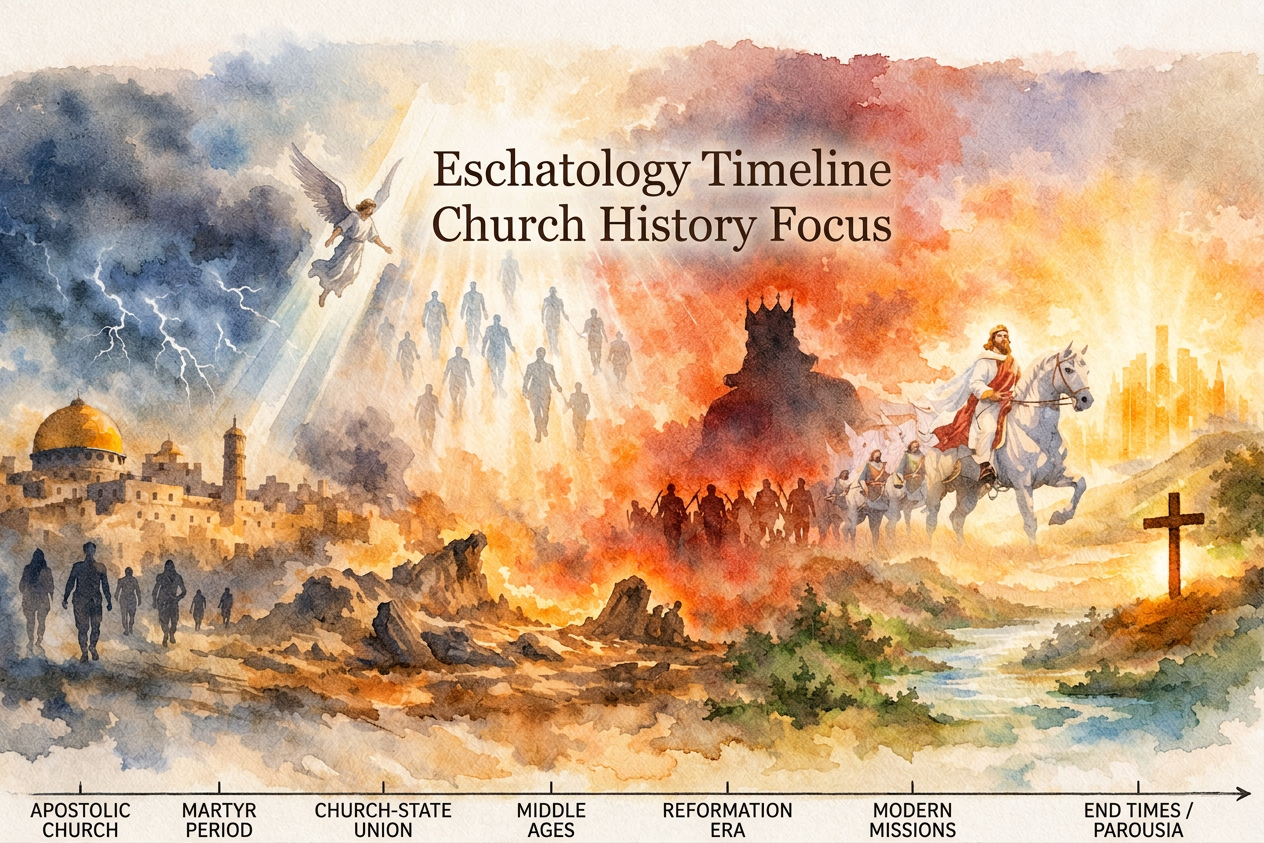
The evolution of early Christian eschatology stressed endurance through tribulation, shifting from premillennialism to amillennialism over centuries.
-

Jesus prayed for unity among believers, emphasizing its importance for faith credibility, reflecting the early Church’s non-denominational unity.
-

Most of what people commonly repeat about the apostles’ deaths comes from early Christian tradition, not the Bible itself. The New Testament records only two apostolic deaths with certainty: James the son of Zebedee (Acts 12:2) and Judas Iscariot (Matthew 27:3–5). Everything else comes from early church writers, some reliable, some legendary. 1. Peter 2.…
-

The series examines early Christianity’s development, exploring doctrine, the Nicene Creed, baptism, and the Trinity’s evolution through historical context.
-

Genesis is foundational for understanding identity, purpose, and the gospel, influencing interpretations of creation, sin, and trust in Scripture.
-

This outline explores the differences between literal and symbolic interpretations of Genesis, emphasizing their impact on Christian doctrine and faith.
-

The guide emphasizes sharing faith with wisdom, gentleness, and grace while being Spirit-led and respectful of others’ readiness.
-

Throughout history, powerful rulers have tried to outlaw Scripture. Governments have burned Bibles. Authorities have imprisoned believers. Entire regimes have declared war on the gospel. Yet every attempt to bury the Word has only caused it to rise with greater power.
-

The content discusses the significance of stars and astronomy, connecting biblical references to scientific perspectives. It highlights historical scientists and their faith, questioning modern skepticism while affirming that all creation, including stars, praises God.