Category: Church History
-

Passover, the Lord’s Supper, and Corpus Christi collectively emphasize God’s covenant love, salvation through Christ’s sacrifice, and their fulfillment.
-

The Feast of Corpus Christi honors the Eucharist, rooted in Scripture, differing in interpretation among Christian denominations regarding its significance.
-
Most of what people commonly repeat about the apostles’ deaths comes from early Christian tradition, not the Bible itself. The New Testament records only two apostolic deaths with certainty: James the son of Zebedee (Acts 12:2) and Judas Iscariot (Matthew 27:3–5). Everything else comes from early church writers, some reliable, some legendary. 1. Peter 2.…
-
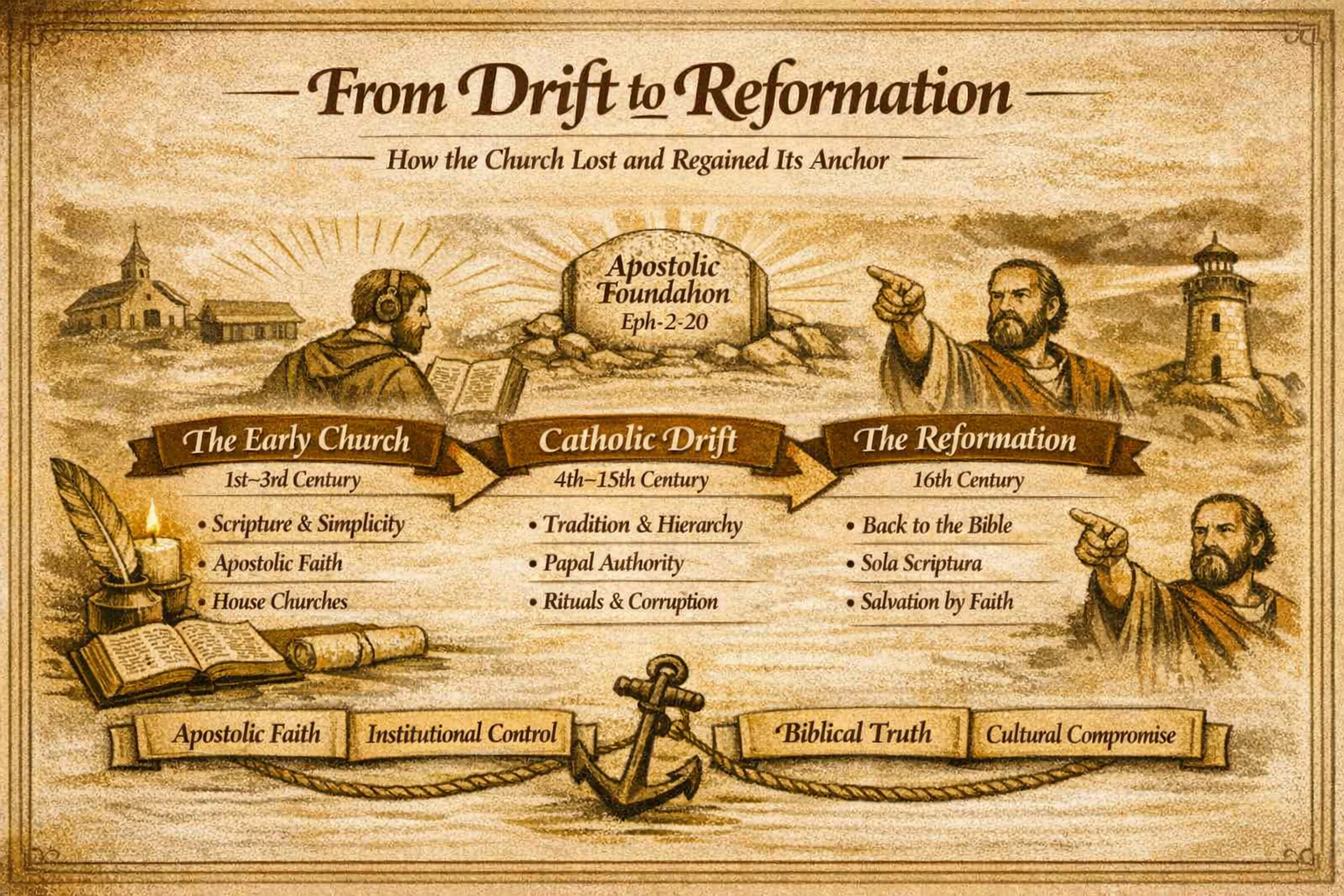
The Church’s historical drift from Scripture and Christ’s simplicity prompts ongoing calls to return to faithfulness and biblical truth.
-
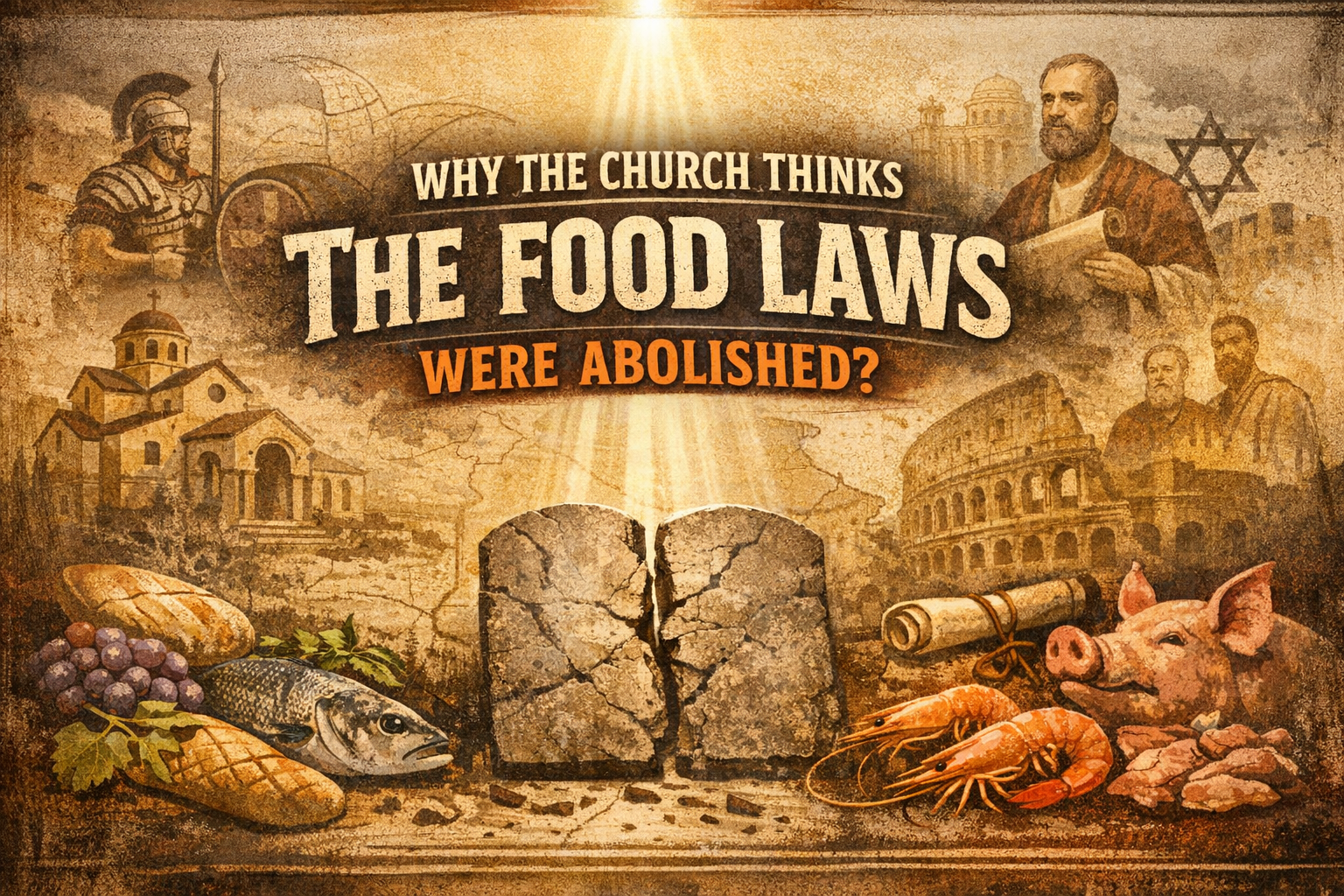
The early church maintained kosher laws, but later anti-Jewish sentiment and traditions led to their rejection by Gentile Christians.
-

The Nicene Creed, developed at two councils, affirms core Christian beliefs about the Trinity, Jesus, and the Church, ensuring doctrinal unity.
-
The series examines early Christianity’s development, exploring doctrine, the Nicene Creed, baptism, and the Trinity’s evolution through historical context.
-

The Trinitarian doctrine developed over centuries to explain the Father, Son, and Holy Spirit’s unity and divine essence amidst monotheism.
-

Early Christians baptized in Jesus’ name, seeing it as fulfilling Matthew 28:19, understanding the Trinity through His authority and identity.
-
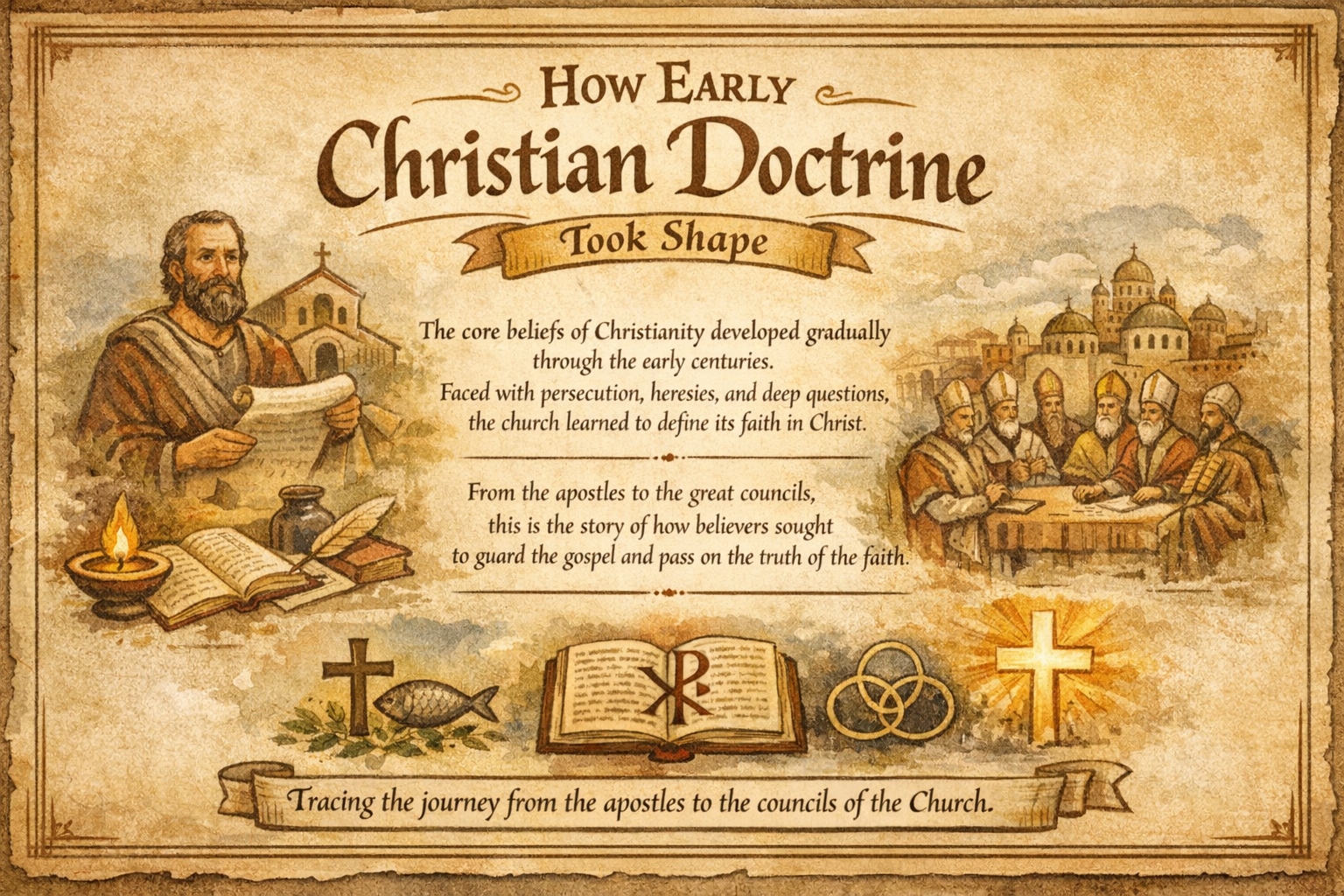
Christian beliefs evolved over centuries through struggles and clarifications, shaping core doctrines recognized across traditions today.