A place to grow your relationship with God

Posts tagged ‘homeschooling’

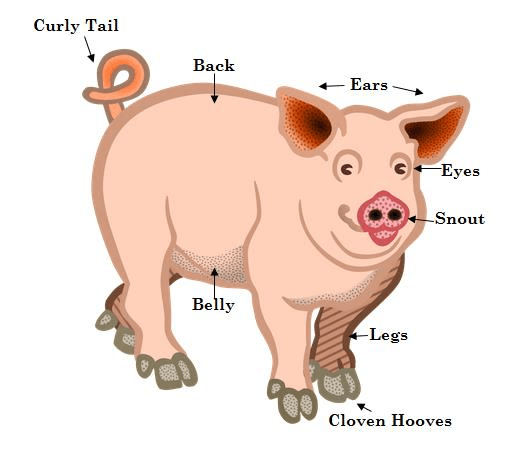
Understanding Pig Anatomy: Key Features Explained for Kids

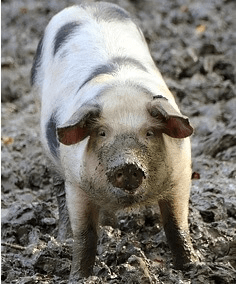
Pigs, like all living things, have a specific anatomy, including an outside structure and internal workings.

Facts about a pig’s external anatomy:

  1. Pigs have rounded, triangular ears.
  2. Pigs have a snout.
  3. Pigs have a curly tail.
  4. Pigs have cloven hooves, which means their hoof is split into two parts.

Activity

  • Examine the labeled picture of the pig.
  • Recite aloud the labeled parts of the pig, including the ears, eyes, snout, legs, hooves, belly, back, and tail.
  • Sketch your own pig.
  • If you are able, draw the arrows and names of the body parts on your pig drawing.

The Story of Dr. Dolittle Chapter 1 Resources

Dr. Dolittle’s favorite pets.

Dab-Dab the Duck
Gub-Gub the Pig
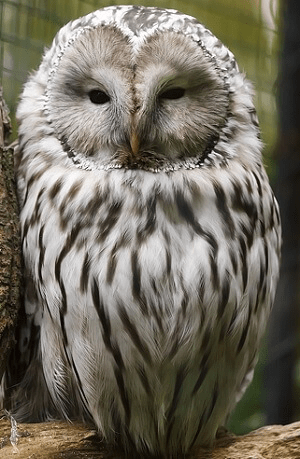
Too-Too the Owl
Jip the Dog
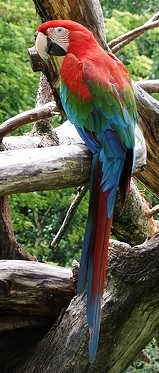
Polynesia the Parrot

Weekly Recap of Articles for Christians Jan 18th to Jan 24th

Bible

Education

Cooking/ House Keeping

Estudio Bíblico en Español

The Story of Mankind: Feudalism

The following, then, is the state of Europe in the year one thousand, when most people were so unhappy that they welcomed the prophecy foretelling the approaching end of the world and rushed to the monasteries, that the Day of Judgement might find them engaged upon devout duties.

At an unknown date, the Germanic tribes had left their old home in Asia and had moved westward into Europe. By sheer pressure of numbers they had forced their way into the Roman Empire. They had destroyed the great western empire, but the eastern part, being off the main route of the great migrations, had managed to survive and feebly continued the traditions of Rome’s ancient glory.

During the days of disorder which had followed, (the true “dark ages” of history, the sixth and seventh centuries of our era,) the German tribes had been persuaded to accept the Christian religion and had recognized the Bishop of Rome as the Pope or spiritual head of the world. In the ninth century, the organizing genius of Charlemagne had revived the Roman Empire and had united the greater part of western Europe into a single state. During the tenth century this empire had gone to pieces. The western part had become a separate kingdom, France. The eastern half was known as the Holy Roman Empire of the German nation, and the rulers of this federation of states then pretended that they were the direct heirs of Caesar and Augustus.

Unfortunately the power of the kings of France did not stretch beyond the moat of their royal residence, while the Holy Roman Emperor was openly defied by his powerful subjects whenever it suited their fancy or their profit.

To increase the misery of the masses of the people, the triangle of western Europe was forever exposed to attacks from three sides. On the south lived the ever-dangerous Muslims. The western coast was ravaged by the Northmen. The eastern frontier (defenseless except for the short stretch of the Carpathian Mountains) was at the mercy of hordes of Huns, Hungarians, Slavs and Tartars.

The peace of Rome was a thing of the remote past, a dream of the “Good Old Days” that were gone forever. It was a question of “fight or die,” and quite naturally people preferred to fight. Forced by circumstances, Europe became an armed camp and there was a demand for strong leadership. Both King and Emperor were far away. The frontiersmen (and most of Europe in the year 1000 was “frontier”) must help themselves. They willingly submitted to the representatives of the king who were sent to administer the outlying districts, provided they could protect them against their enemies.

Soon central Europe was dotted with small principalities, each one ruled by a duke or a count or a baron or a bishop, as the case might be, and organized as a fighting unit. These dukes and counts and barons had sworn to be faithful to the king who had given them their “feudum” (hence our word “feudal,”) in return for their loyal services and a certain amount of taxes. But travel in those days was slow and the means of communication were exceedingly poor. The royal or imperial administrators therefore enjoyed great independence, and within the boundaries of their own province they assumed most of the rights which in truth belonged to the king.

But you would make a mistake if you supposed that the people of the eleventh century objected to this form of government. They supported Feudalism because it was a very practical and necessary institution. Their Lord and Master usually lived in a big stone house erected on the top of a steep rock or built between deep moats, but within sight of their subjects. In case of danger the subjects found shelter behind the walls of the baronial stronghold. That is why they tried to live as near the castle as possible and it accounts for the many European cities which began their career around a feudal fortress.

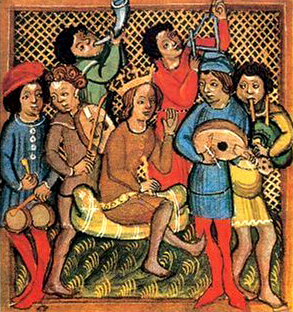
But the knight of the early middle ages was much more than a professional soldier. He was the civil servant of that day. He was the judge of his community and he was the chief of police. He caught the highwaymen and protected the wandering peddlers who were the merchants of the eleventh century. He looked after the dikes so that the countryside should not be flooded (just as the first noblemen had done in the valley of the Nile four thousand years before). He encouraged the troubadours who wandered from place to place telling the stories of the ancient heroes who had fought in the great wars of the migrations. Besides, he protected the churches and the monasteries within his territory, and although he could neither read nor write, (it was considered unmanly to know such things,) he employed a number of priests who kept his accounts and who registered the marriages and the births and the deaths which occurred within the baronial or ducal domains.

In the fifteenth century the kings once more became strong enough to exercise those powers which belonged to them because they were “anointed of God.” Then the feudal knights lost their former independence. Reduced to the rank of country squires, they no longer filled a need and soon they became a nuisance. But Europe would have perished without the “feudal system” of the dark ages. There were many bad knights as there are many bad people today. But generally speaking, the rough-fisted barons of the twelfth and thirteenth century were hard-working administrators who rendered a most useful service to the cause of progress. During that era the noble torch of learning and art which had illuminated the world of the Egyptians and the Greeks and the Romans was burning very low. Without the knights and their good friends, the monks, civilization would have been extinguished entirely, and the human race would have been forced to begin once more where the caveman had left off.

The Story of Doctor Dolittle Chapter 2: Animal Language

Chapter 2: Animal Language

It happened one day that the Doctor was sitting in his kitchen talking with the Cat’s-meat-Man who had come to see him with a stomach-ache.

“Why don’t you give up being a people’s doctor, and be an animal-doctor?” asked the Cat’s-meat-Man.

The parrot, Polynesia, was sitting in the window looking out at the rain and singing a sailor-song to herself. She stopped singing and started to listen.

“You see, Doctor,” the Cat’s-meat-Man went on, “you know all about animals-much more than what these here vets do. That book you wrote-about cats, why, it’s wonderful! I can’t read or write myself-or maybe I’d write some books. But my wife, Theodosia, she’s a scholar, she is. And she read your book to me. Well, it’s wonderful-that’s all can be said-wonderful. You might have been a cat yourself. You know the way they think. And listen: you can make a lot of money doctoring animals. Do you know that? You see, I’d send all the old women who had sick cats or dogs to you. And if they didn’t get sick fast enough, I could put something in the meat I sell ’em to make ’em sick, see?”

“Oh, no,” said the Doctor quickly. “You mustn’t do that. That wouldn’t be right.”

“Oh, I didn’t mean real sick,” answered the Cat’s-meat-Man. “Just a little something to make them droopy-like was what I had reference to. But as you say, maybe it ain’t quite fair on the animals. But they’ll get sick anyway, because the old women always give ’em too much to eat. And look, all the farmers round about who had lame horses and weak lambs-they’d come. Be an animal-doctor.”

When the Cat’s-meat-Man had gone the parrot flew off the window on to the Doctor’s table and said,

“That man’s got sense. That’s what you ought to do. Be an animal-doctor. Give the silly people up-if they haven’t brains enough to see you’re the best doctor in the world. Take care of animals instead-they’ll soon find it out. Be an animal-doctor.”

“Oh, there are plenty of animal-doctors,” said John Dolittle, putting the flower-pots outside on the window-sill to get the rain.

“Yes, there are plenty,” said Polynesia. “But none of them are any good at all. Now listen, Doctor, and I’ll tell you something. Did you know that animals can talk?”

“I knew that parrots can talk,” said the Doctor.

“Oh, we parrots can talk in two languages-people’s language and bird-language,” said Polynesia proudly. “If I say, ‘Polly wants a cracker,’ you understand me. But hear this: Ka-ka oi-ee, fee-fee?”

“Good Gracious!” cried the Doctor. “What does that mean?”

“That means, ‘Is the porridge hot yet?’-in bird-language.”

“My! You don’t say so!” said the Doctor. “You never talked that way to me before.”

“What would have been the good?” said Polynesia, dusting some cracker-crumbs off her left wing. “You wouldn’t have understood me if I had.”

“Tell me some more,” said the Doctor, all excited; and he rushed over to the dresser-drawer and came back with the butcher’s book and a pencil. “Now don’t go too fast-and I’ll write it down. This is interesting-very interesting-something quite new. Give me the Birds’ A.B.C. first-slowly now.”

So that was the way the Doctor came to know that animals had a language of their own and could talk to one another. And all that afternoon, while it was raining, Polynesia sat on the kitchen table giving him bird words to put down in the book.

At tea-time, when the dog, Jip, came in, the parrot said to the Doctor, “See, he’s talking to you.”

“Looks to me as though he were scratching his ear,” said the Doctor.

“But animals don’t always speak with their mouths,” said the parrot in a high voice, raising her eyebrows. “They talk with their ears, with their feet, with their tails-with everything. Sometimes they don’t want to make a noise. Do you see now the way he’s twitching up one side of his nose?”

“What’s that mean?” asked the Doctor.

“That means, ‘Can’t you see that it has stopped raining?'” Polynesia answered. “He is asking you a question. Dogs nearly always use their noses for asking questions.”

After a while, with the parrot’s help, the Doctor got to learn the language of the animals so well that he could talk to them himself and understand everything they said. Then he gave up being a people’s doctor altogether.

As soon as the Cat’s-meat-Man had told everyone that John Dolittle was going to become an animal-doctor, old ladies began to bring him their pet pugs and poodles who had eaten too much cake; and farmers came many miles to show him sick cows and sheep.

One day a plow-horse was brought to him; and the poor thing was terribly glad to find a man who could talk in horse-language.

“You know, Doctor,” said the horse, “that vet over the hill knows nothing at all. He has been treating me six weeks now-for spavins. What I need is spectacles. I am going blind in one eye. There’s no reason why horses shouldn’t wear glasses, the same as people. But that stupid man over the hill never even looked at my eyes. He kept on giving me big pills. I tried to tell him; but he couldn’t understand a word of horse-language. What I need is spectacles.”

“Of course-of course,” said the Doctor. “I’ll get you some at once.”

“I would like a pair like yours,” said the horse-“only green. They’ll keep the sun out of my eyes while I’m plowing the Fifty-Acre Field.”

“Certainly,” said the Doctor. “Green ones you shall have.”

“You know, the trouble is, Sir,” said the plow-horse as the Doctor opened the front door to let him out-“the trouble is that anybody thinks he can doctor animals-just because the animals don’t complain. As a matter of fact it takes a much cleverer man to be a really good animal-doctor than it does to be a good people’s doctor. My farmer’s boy thinks he knows all about horses. I wish you could see him-his face is so fat he looks as though he had no eyes-and he has got as much brain as a potato-bug. He tried to put a mustard-plaster on me last week.”

“Where did he put it?” asked the Doctor.

“Oh, he didn’t put it anywhere-on me,” said the horse. “He only tried to. I kicked him into the duck-pond.”

“Well, well!” said the Doctor.

“I’m a pretty quiet creature as a rule,” said the horse-“very patient with people-don’t make much fuss. But it was bad enough to have that vet giving me the wrong medicine. And when that red-faced booby started to monkey with me, I just couldn’t bear it anymore.”

“Did you hurt the boy much?” asked the Doctor.

“Oh, no,” said the horse. “I kicked him in the right place. The vet’s looking after him now. When will my glasses be ready?”

“I’ll have them for you next week,” said the Doctor. “Come in again Tuesday-Good morning!”

Then John Dolittle got a fine, big pair of green spectacles; and the plow-horse stopped going blind in one eye and could see as well as ever.

And soon it became a common sight to see farm-animals wearing glasses in the country round Puddleby; and a blind horse was a thing unknown.

And so it was with all the other animals that were brought to him. As soon as they found that he could talk their language, they told him where the pain was and how they felt, and of course it was easy for him to cure them.

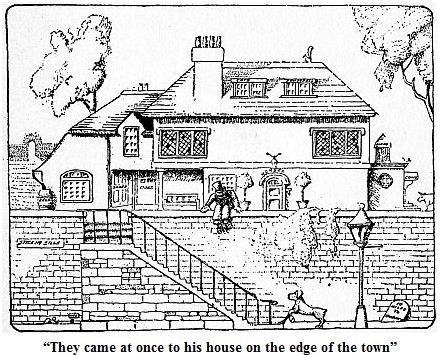
Now all these animals went back and told their brothers and friends that there was a doctor in the little house with the big garden who really was a doctor. And whenever any creatures got sick-not only horses and cows and dogs-but all the little things of the fields, like harvest-mice and water-voles, badgers and bats, they came at once to his house on the edge of the town, so that his big garden was nearly always crowded with animals trying to get in to see him.

There were so many that came that he had to have special doors made for the different kinds. He wrote “HORSES” over the front door, “COWS” over the side door, and “SHEEP” on the kitchen door. Each kind of animal had a separate door-even the mice had a tiny tunnel made for them into the cellar, where they waited patiently in rows for the Doctor to come round to them.

And so, in a few years’ time, every living thing for miles and miles got to know about John Dolittle, M.D. And the birds who flew to other countries in the winter told the animals in foreign lands of the wonderful doctor of Puddleby-on-the-Marsh, who could understand their talk and help them in their troubles. In this way he became famous among the animals-all over the world-better known even than he had been among the folks of the West Country, And he was happy and liked his life very much.

One afternoon when the Doctor was busy writing in a book, Polynesia sat in the window-as she nearly always did-looking out at the leaves blowing about in the garden. Presently she laughed aloud.

“What is it, Polynesia?” asked the Doctor, looking up from his book.

“I was just thinking,” said the parrot; and she went on looking at the leaves.

“What were you thinking?”

“I was thinking about people,” said Polynesia. “People make me sick. They think they’re so wonderful. The world has been going on now for thousands of years, hasn’t it? And the only thing in animal-language that people have learned to understand is that when a dog wags his tail he means ‘I’m glad!’-It’s funny, isn’t it? You are the very first man to talk like us. Oh, sometimes people annoy me dreadfully-such airs they put on-talking about ‘the dumb animals.’ Dumb!-Huh! Why I knew a macaw once who could say ‘Good morning!’ in seven different ways without once opening his mouth. He could talk every language-and Greek. An old professor with a gray beard bought him. But he didn’t stay. He said the old man didn’t talk Greek right, and he couldn’t stand listening to him teach the language wrong. I often wonder what’s become of him. That bird knew more geography than people will ever know.-People, Golly! I suppose if people ever learn to fly-like any common hedge-sparrow-we shall never hear the end of it!”

“You’re a wise old bird,” said the Doctor. “How old are you really? I know that parrots and elephants sometimes live to be very, very old.”

“I can never be quite sure of my age,” said Polynesia. “It’s either a hundred and eighty-three or a hundred and eighty-two. But I know that when I first came here from Africa, King Charles was still hiding in the oak-tree-because I saw him. He looked scared to death.”
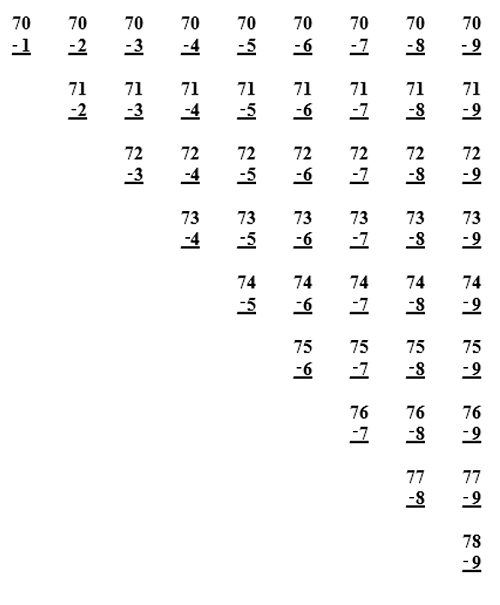
Math: Subtract Numbers Up to 90

STEP 1

  • Have the children write out and complete the subtraction exercises below on paper.

STEP 2

  • Assess mastery by reading aloud the listed problems and having the children mentally compute and recite the solutions.
  • If children have difficulties, have children redo their written practice with pencil and paper again and then reassess.

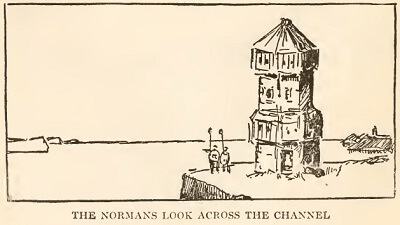
The Story of Mankind: The Norsemen

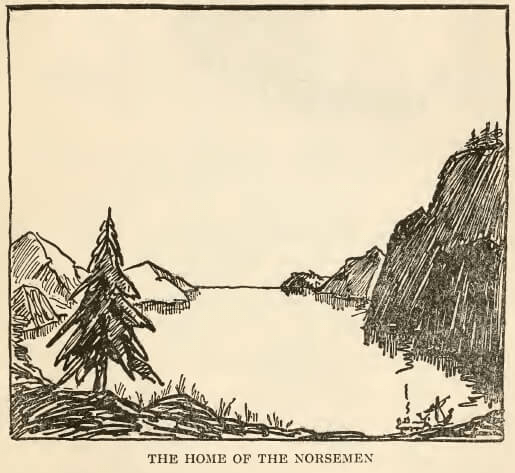
In the third and fourth centuries, the Germanic tribes of central Europe had broken through the defenses of the Empire that they might plunder Rome and live on the fat of the land. In the eighth century it became the turn of the Germans to be the “plundered-ones.” They did not like this at all, even if their enemies were their first cousins, the Norsemen, who lived in Denmark and Sweden and Norway.

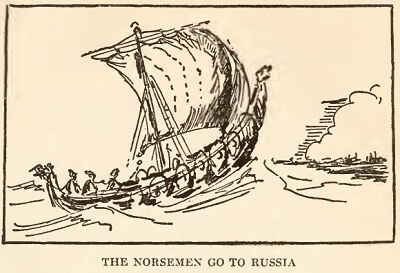
What forced these hardy sailors to turn pirate we do not know, but once they had discovered the advantages and pleasures of a buccaneering career there was no one who could stop them. They would suddenly descend upon a peaceful Frankish or Frisian village, situated on the mouth of a river. They would kill all the men and steal all the women. Then they would sail away in their fast-sailing ships and when the soldiers of the king or emperor arrived upon the scene, the robbers were gone and nothing remained but a few smoldering ruins.

During the days of disorder which followed the death of Charlemagne, the Northmen developed great activity. Their fleets made raids upon every country and their sailors established small independent kingdoms along the coast of Holland and France and England and Germany, and they even found their way into Italy. The Northmen were very intelligent. They soon learned to speak the language of their subjects and gave up the uncivilized ways of the early Vikings (or Sea-Kings) who had been very picturesque but also very unwashed and terribly cruel.

Early in the tenth century a Viking by the name of Rollo had repeatedly attacked the coast of France. The king of France, too weak to resist these northern robbers, tried to bribe them into “being good.” He offered them the province of Normandy, if they would promise to stop bothering the rest of his domains. Rollo accepted this bargain and became “Duke of Normandy.”

But the passion of conquest was strong in the blood of his children. Across the channel, only a few hours away from the European mainland, they could see the white cliffs and the green fields of England. Poor England had passed through difficult days. For two hundred years it had been a Roman colony.

After the Romans left, it had been conquered by the Angles and the Saxons, two German tribes from Schleswig. Next the Danes had taken the greater part of the country and had established the kingdom of Cnut. The Danes had been driven away and now (it was early in the eleventh century) another Saxon king, Edward the Confessor, was on the throne. But Edward was not expected to live long and he had no children. The circumstances favored the ambitious dukes of Normandy.

In 1066 Edward died. Immediately William of Normandy crossed the channel, defeated and killed Harold of Wessex (who had taken the crown) at the battle of Hastings, and proclaimed himself king of England.

In another chapter I have told you how in the year 800 a German chieftain had become a Roman Emperor. Now in the year 1066 the grandson of a Norse pirate was recognized as King of England.

Why should we ever read fairy stories, when the truth of history is so much more interesting and entertaining?

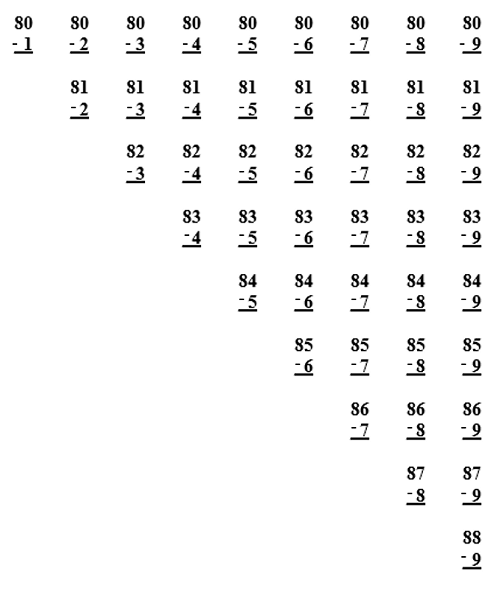
Math: Subtract Numbers Up to 80

STEP 1

  • Have the children write out and complete the subtraction exercises below on paper.

STEP 2

  • Assess mastery by reading aloud the listed problems and having the children mentally compute and recite the solutions.
  • If children have difficulties, have children redo their written practice with pencil and paper again and then reassess.

The Story of Doctor Dolittle Chapter 1: Puddleby Vocabulary Words

The Story of Doctor Dolittle by Hugh Lofting     

Chapter 1: Puddleby Vocabulary Words

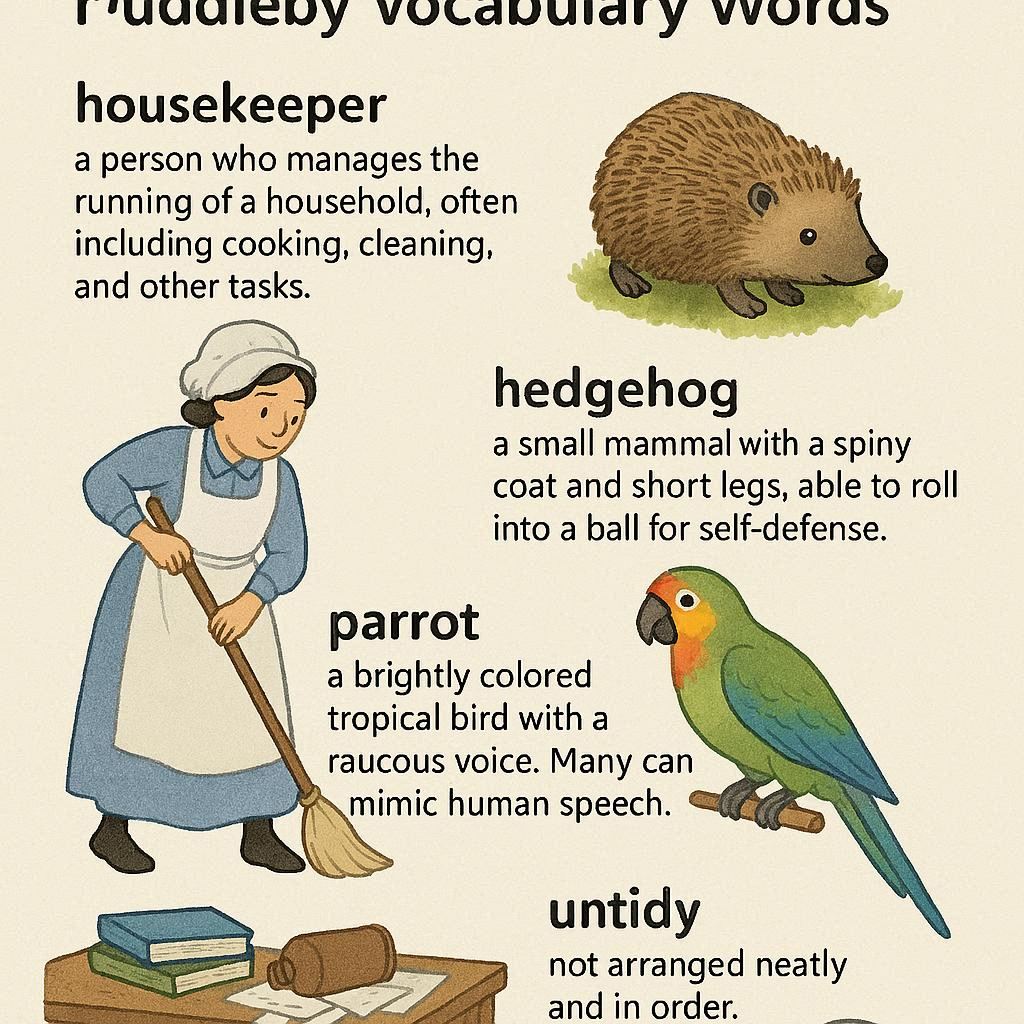
Housekeeper: A person who manages the running of a household, often including cooking, cleaning, and other tasks.
Hedgehog: A small mammal with a spiny coat and short legs, able to roll into a ball for self-defense.
Parrot: A brightly colored tropical bird with a raucous voice. Many can mimic human speech.
Untidy: Arranged neatly and in order.
Sixpence: An old British coin, last minted in the 1970s.
Bureau: A chest of drawers.

The Wind in the Willows Chapter 1 Vocabulary Words

Chapter 1: The Riverbank

Vocabulary

Wind: The perceptible natural movement of the air, especially in the form of a current of air blowing from a particular direction.
Willows: A tree or shrub of temperate climates that typically has narrow leaves, bears catkins, and grows near water.
Cellarage: Cellars collectively.
Bijou: Small and elegant (residence).
Sculls: A pair of small oars used by a single rower.
Backwater: 1) An isolated or peaceful place, 2) A part of a river not reached by the current.
Punting: Travel in a punt (flat-bottomed ferryboat).
Weir: A low dam built across a river to raise the level of water upstream or regulate its flow.