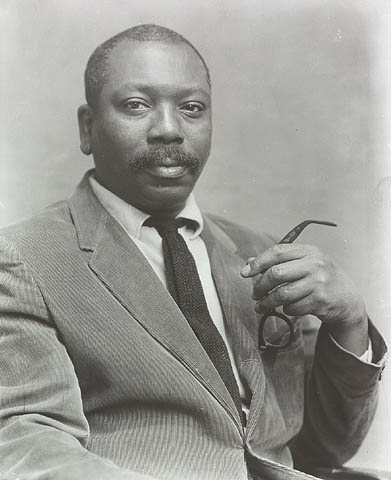
Jacob Lawrence: The Storyteller of the Great Migration

Jacob Lawrence stands among the most celebrated American painters of the 20th century. His bold colors, dynamic shapes, and powerful storytelling captured the struggles, hopes, and triumphs of African American life. Through his art, he preserved history, honored community, and gave visual voice to stories too often overlooked.
Early Life: A Young Artist Shaped by Community
Jacob Lawrence was born on September 7, 1917, in Atlantic City, New Jersey. His early childhood was marked by movement and change as his parents separated and his mother worked to support the family. At age 13, Lawrence moved with his siblings to Harlem, just as the Harlem Renaissance was flourishing.
Harlem became his classroom.
He absorbed the colors, rhythms, and stories of the neighborhood—street vendors, musicians, activists, and everyday workers. Lawrence began taking art classes at the Utopia Children’s Center and later studied at the Harlem Art Workshop, where he was mentored by prominent Black artists such as Charles Alston and Augusta Savage.
By age 21, he was already creating powerful narrative series that explored African American history and identity.
Middle Life: A Visionary Voice in American Art
Lawrence’s middle years were marked by extraordinary artistic achievement and national recognition.
The Migration Series
In 1941, at just 23 years old, Lawrence completed his most famous work: The Migration Series, a collection of 60 paintings depicting the Great Migration of African Americans from the rural South to the urban North. The series was groundbreaking—not only for its subject matter but also because it was acquired jointly by the Museum of Modern Art (MoMA) and the Phillips Collection.
Lawrence became the first African American artist represented by a major New York gallery.
Service and Teaching
During World War II, Lawrence served in the U.S. Coast Guard, where he continued to paint scenes of daily life aboard ship. After the war, he taught at several institutions, including Black Mountain College, the Art Students League, and later the University of Washington.
A Distinctive Style
Lawrence’s work is instantly recognizable:
- flat, vibrant colors
- strong geometric shapes
- simplified figures
- powerful storytelling
He painted series on Harriet Tubman, Frederick Douglass, Toussaint Louverture, and the builders of America—carpenters, steelworkers, and seamstresses. His art honored both heroes and everyday people.
End of Life: A Legacy Preserved in Color and Story
Jacob Lawrence continued painting and teaching well into his later years. His work remained deeply connected to themes of community, justice, and perseverance.
Lawrence died on June 9, 2000, in Seattle, Washington.
He is buried at Mount Pleasant Cemetery in Seattle, where his resting place reflects the city he called home for the final decades of his life.
A Lasting Impact
Jacob Lawrence’s legacy lives on in museums, classrooms, and communities across the nation. His paintings continue to teach history, spark conversation, and inspire new generations of artists.
During Black History Month, we honor Jacob Lawrence not only as a painter, but as a storyteller—one who used color and form to preserve the journey, resilience, and brilliance of African American life.
Jacob Lawrence – Timeline of an American Master
Early Life
- 1917 – Born on September 7 in Atlantic City, New Jersey.
- 1930 – Moves to Harlem at age 13, during the height of the Harlem Renaissance.
- 1932–1934 – Studies at the Harlem Art Workshop under Charles Alston and Augusta Savage.
- 1935 – Begins working with the Works Progress Administration (WPA) Federal Art Project.
- 1938 – Holds his first solo exhibition at the Harlem YMCA.
Middle Life
- 1941 – Completes The Migration Series at age 23; it is jointly acquired by MoMA and the Phillips Collection.
- 1941–1945 – Serves in the U.S. Coast Guard during World War II, continuing to paint.
- 1946 – Receives a Guggenheim Fellowship.
- 1950s–1960s – Creates major narrative series on Harriet Tubman, Frederick Douglass, and builders/workers in America.
- 1962–1970 – Teaches at various institutions, including the Art Students League and Pratt Institute.
- 1971 – Joins the faculty of the University of Washington in Seattle, where he teaches for 15 years.
Later Life
- 1980s–1990s – Continues painting, lecturing, and exhibiting nationally and internationally.
- 1998 – Retires from teaching but remains active in the arts community.
- 2000 – Dies on June 9 in Seattle, Washington.
- 2000 – Buried at Mount Pleasant Cemetery in Seattle.

2 responses to “Jacob Lawrence: The Storyteller of the Great Migration”
[…] Coachman: First Black Woman Olympic Champion Fats Domino’s Life: From New Orleans to Stardom Jacob Lawrence: The Storyteller of the Great Migration Muhammed Ali: A Champion in the Ring and a Voice for […]
[…] Jacob Lawrence: The Storyteller of the Great Migration […]