I. What Communion Really Is
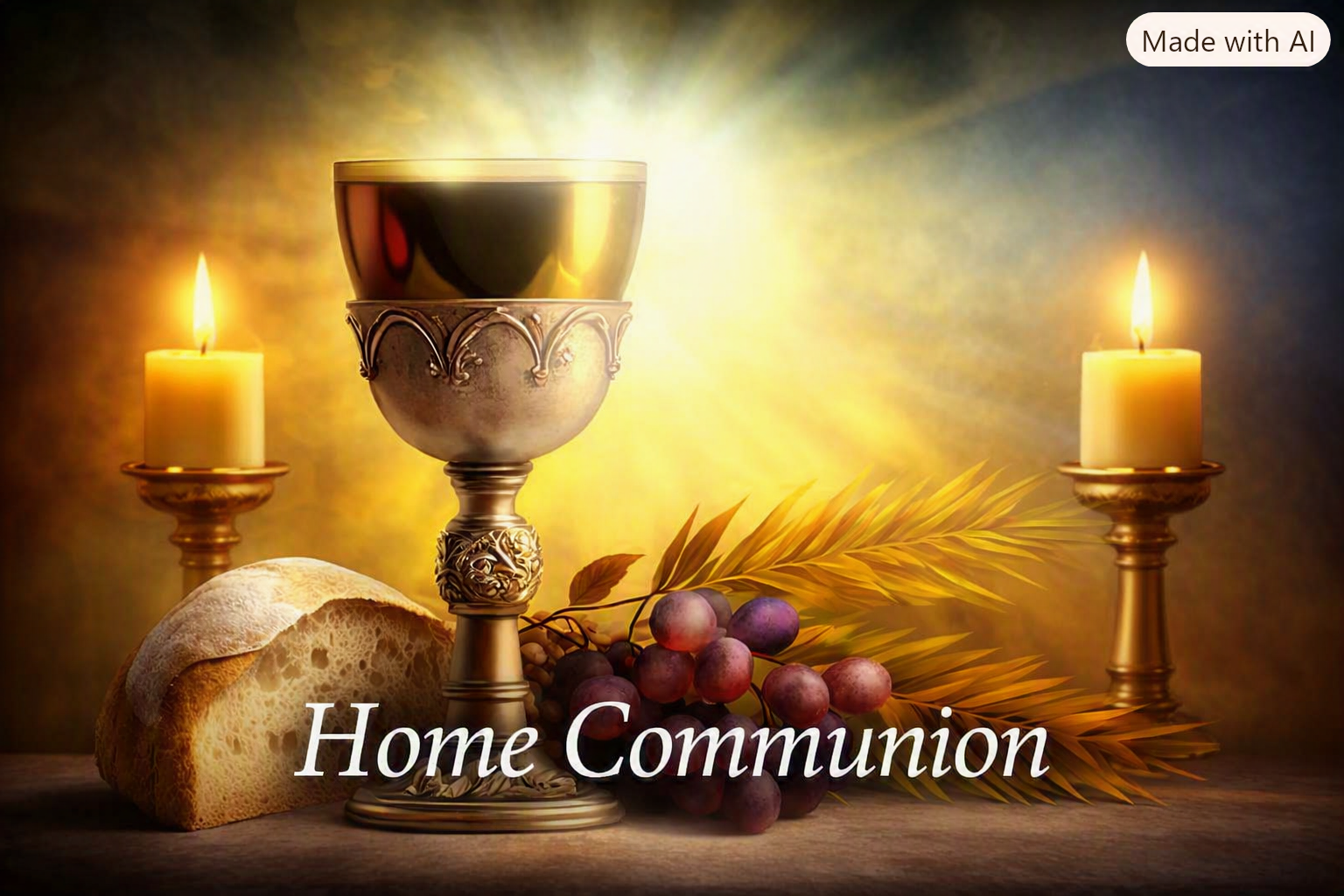
Communion is remembering Jesus, using the symbols He gave:
- Bread — His body
- Grape juice — His blood
These symbols never change based on location, ceremony, or volume. Communion is about remembering Jesus, not ritual performance.
See Luke 22:15-20
Jesus was in the upper room of a house during the last supper. (Luke 22:8-14)
II. Communion Began in Homes
Acts 2:46
“breaking bread from house to house”
This phrase refers to shared meals that included communion.
Early believers:
- met in homes
- ate together
- remembered Jesus quietly
- had no loud music
- had no crowds
- had no clergy officiating
This is the biblical pattern of home communion.
III. Communion Is Remembering — Not Location
Jesus said:
“Do this in remembrance of Me.”
He did not say:
- only in church
- only with clergy
- only with music
- only during a service
Communion is remembering, not a ritual tied to a building. This connects directly to Sabbath communion.
IV. The Last Supper Was a Quiet Family Meal
The Last Supper was:
- a family‑style meal
- quiet
- intimate
- around a table
- in a home
- with bread and wine
This is the model Jesus gave — simple, relational, and peaceful.
Passover was originally a family meal. (Exodus 12:1-14)
V. Sabbath Naturally Becomes Communion
During Sabbath you already:
- bless bread
- bless the cup
- remember God’s covenant
- gather as a family
- share a sacred meal
When you connect these symbols to Jesus, Sabbath becomes communion in the biblical sense.
This is especially meaningful for families who need quiet, gentle worship.
VI. The Most Important Part: A Worthy Heart
Paul teaches that communion should be taken worthily, meaning:
- with reverence
- with self‑examination
- with awareness of Jesus’ sacrifice
- with love toward others
1 Corinthians 11:23–33 (key points)
- “Examine yourself.”
- “Do this in remembrance of Me.”
- “As often as you eat… you show the Lord’s death.”
- “He who eats unworthily… is guilty.”
- “Judge yourselves so you won’t be judged.”
- “Wait for one another.”
The warning is about attitude, not location.
A quiet Sabbath meal taken with reverence is far more worthy than a loud service taken without thought.
VII. Communion Is Also About Unity
Paul ends with:
“tarry one for another”
Meaning:
- wait for each other
- honor each other
- take communion together in love
VIII. Summary
- Communion began in homes.
- It is remembering Jesus, not performing a ritual.
- The Last Supper was quiet and intimate.
- Sabbath bread + grape juice = communion when connected to Jesus.
- The key is taking it worthily, with reverence and unity.
Notes
- Bread- a loaf of bread can work. You just need bread that is set apart.
- Wine – grape juice of wine: both comes from the fruit of the vine.
- Jesus represents the Passover Lamb. Jesus is also the bread of life. (John 6:48)
- Jesus is saying that his body is now represented by bread.
- Jesus is saying that his blood is now represented by the fruit of the vine. Remember Jesus is the vine. (John 15:1)
Important Links
- The Importance of Worthy Communion Practices
- From Passover to Communion: God’s Covenant Journey
