A place to grow your relationship with God

Archive for the ‘Useful tips’ Category

Natural Cleaning Tips: Vinegar, Lemons & Salt

The Virtues of Vinegar, Lemons & Salt


The Old Farmer’s Almanac has long been a proponent of the cleaning power of vinegar, lemons, and salt (and other equally down-to-earth ingredients). Following is a compilation of years of Almanac cleaning advice for the Kitchen.

Appliances

  • Dishwasher
    • To help keep the drain line clean and sweet smelling, add ½ cup white vinegar to the rinse cycle.
    • Fresh lemon juice will remove soap film from the interior.
  • Garbage Disposal
    • If the rubber shield smells after much use, soak it in a pan of white vinegar.
    • Toss used lemons into your garbage disposal to help keep it clean and fresh smelling.
  • Humidifier
    • To clean the filter, remove it and soak it in a pan of white vinegar until all the sediment is off. Then wash in dishwashing detergent and water.
  • Stove
    • Filmy dirt and grease on the stovetop will come clean with white vinegar.
    • To prevent grease buildup, dampen a rag with a solution of white vinegar and water and wipe out the interior of the oven.
    • Oven spills will stop smoking if you sprinkle them with salt. Wipe with a
      damp cloth after the oven cools.
    • If something in the oven catches on fire, salt or baking soda will help smother the flames.
    • A mixture of salt and cinnamon makes a good oven freshener. Sprinkle spills while the oven is still warm to take away the burned smell.
  • Refrigerator
    • Half a lemon place on a shelf will absorb odors
    • Salt and baking soda in water will clean and sweeten the inside of your refrigerator.

Metals

  • Chrome
    • Clean of soup and stains with a mixture of 1 teaspoon salt and 2 tablespoons white vinegar. To shine chrome and remove spots, rub with a piece of lemon rind, then wash and dry with a soft cloth.
  • Chrome and Stainless Steel
    • Shine with a cloth sprinkled generously with flour. Rub well, then dust off gently with another cloth.
  • Stainless Steel
    • Remove white hard water stains by rubbing with white vinegar
  • Brass, Copper, and Bronzer
    • Make a thick paste of salt, white vinegar, and flour. Rub it on the metal, then wash, rinse, and wipe dry.
  • Copper and Brass
    • Rub with lemon juice or for heavy corrosion, a paste of lemon juice and salt. Wash, rinse, and wipe dry.
  • Copper
    • Dip sorrel leaves in hot water and rub the metal to a rich
  • Silver
    • To ease polishing, rub with salt before washing and polishing.
  • Silverware
    • To remove stains, place silverware in a pan and cover with sour milk. Let stand overnight. In the morning, rinse with cold water then hot water.
  • Aluminum Utensils
    • When discolored, boil in lemon juice or sliced lemon and water to renew the shine. Or clean with a cloth dipped in lemon juice, then rinse with warm water
  • Aluminum Pans
    • Remove dark stains by filling the pan with water, adding 1 tablespoon white vinegar for each quart of water, and boiling for ten minutes.
  • Sooty Pans: Before using a pan for
  • outdoor cooking, coat the bottom with soap.
  • The soot that accumulates during cooking will wash off easily with
  • the soap.
  • Greasy Pans: Sprinkle with salt, then wipe with a paper towel
  • Pins with Burned-On Food: Fill with cold water, add 2 to 3 table
  • spoons salt, and let stand overnight. In the morning, bring the water
  • slowly to a boil, and your pan will be dean

DISHES & GLASSWARE

  • To remove chalky deposits, put dishes and glassware in the dish washer. Place a cup filled with white vinegar on the bottom rack. Run the dishwasher for five minutes, stop the machine, and empty the cup (now full of water). Refill with vinegar. Complete the cycle. Follow with another complete cycle
    using dishwasher detergent.
  • To remove cloudy mineral deposits from drinking glasses, put a tablespoon of lemon juice in each glass and fill with hot water Let stand for several hours, then wash.
  • To remove mineral deposits from baby bottles, add lemon juice to the water when boiling the bottles.
  • Let discolored or stained bottles, jars, and vases stand for some time in a solution of salt and white vinegar. Shake well and rinse.
  • Rub glass decanters with a cut lemon or soak in lemon juice and water. Dry with a lint-free cloth. To renew the sparkle and brightness inside, add a little water and a small piece of freshly cut lemon and shake well.
  • Use lemon juice and salt to return the luster to china.
  • To remove tea stains, scrub teacups and teapots vigorously with salt, then wash and dry.

MISCELLANEOUS

  • Countertops:
    • Laminated counters and tabletops
      • Can be cleaned by rubbing with a soft cloth soaked in white vinegar. This also makes them shine.
      • To remove stains without scratching, make a paste of baking soda and water. Apply it to the stain, let sit for a minute or two, and rub to remove.
  • Drip Coffeemakers
    • To clean, fill the reservoir with white vinegar and run through a brewing cycle.
  • Pastry Boards and Rolling Pins
    • Bleach by occasionally rubbing with a cut lemon.
  • Closed Containers
    • Use salt to deodorize Thermoses and other closed containers.
  • Sponges:
    • Soak in cold salt water to refresh.

WORKING WITH THE WEATHER

  • Heavy-Duty Cleaning
    • Save chores such as scouring the oven for a day with a brisk breeze, since many cleaning products give off potentially harmful fumes. Whether you’re using a commercial cleaner or ammonia or simply turning on your oven for its self-cleaning operation, for good ventilation open the windows on a dry day when the air is moving. Open both a kitchen window and one on the opposite side of the house to get a cross draft.
    • Chlorine bleach and other solutions for cleaning bathroom tiles also should be used only with cross ventilation.
    • As a general rule, unless it’s plain soap, if you can smell it and it is used for cleaning, get it out of the air as quickly as possible. A heavy, humid day, even with the help of a window fan, is not the right time. -Barbara Radcliffe Rogers

Ancient Tips for Modern Dieters: Weight Loss Remedies
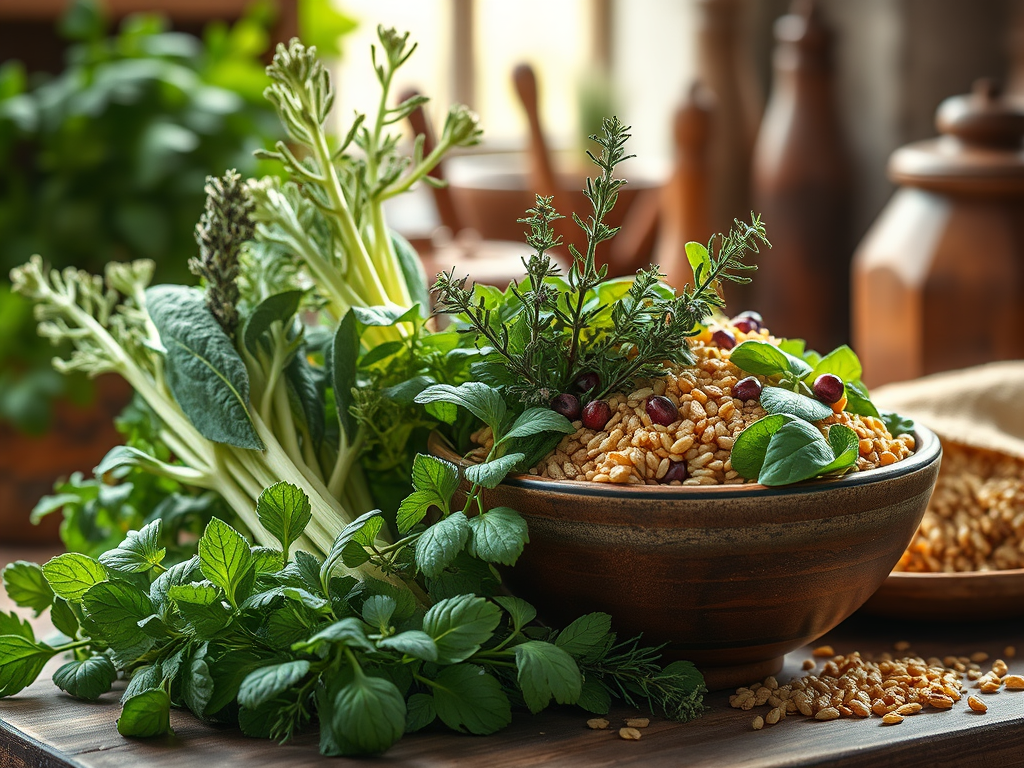
People have been dieting and trying to lose weight for many years.

In the 13th-century household of King Edward I of England, fennel and coriander seeds were kept in abundance for the many fast days. They were used more to curb hunger than to provide nourishment.

A recipe “to make one slender” appeared in the Good Housewife’s Jewel (1585): “Take fennel and boil it in plenty of water, then wring out the juice once it’s cooked, and drink it morning and night to ease the body.” The Greeks called fennel marathon, from maraino, meaning “to grow thin,” and used it as a light broth to help reduce heaviness.

The tradition of afternoon tea in early England may have started as a way to curb hunger and enjoy a soothing drink. Similar to other teas, especially sage tea, thyme was believed to be “good against the wambling and gripings of the belly,” according to 17th-century herbalist John Gerard.

AIDS FOR DIETERS: taken from Traditional Home Remedies Use with care. This is not to replace any doctor’s advice. You know your health conditions. Don’t do anything that would put your health at risk.

  • Add fennel to your diet to curb your appetite.
  • Drink infusions of sage or thyme.
  • Consider adding bulgur wheat to your diet. It’s full of protein, niacin, and iron; low in sodium and fat; and a good source of fiber.
  • Dieters benefit from adding more greens to their diets, such as collards, Swiss chard, beet greens,
    turnip greens, kale, and mustard greens. These also may lower the risks of cancer, high cholesterol, and diabetes.
    • Add them to rice dishes or salads, or serve them steamed with feta cheese or slivered almonds.
  • Some studies suggest that soup eaters lose weight more easily than those who shun soups.
    • But make sure to avoid cream soups and soups that are high in meat fats.
  • Dieters would do well to nearly eliminate meat and alcohol from their diets.
    • (Pregnant and nursing women, convalescents, and those doing heavy manual labor need more protein than others, however, and might not want to eliminate meats.)
      • They should increase their intake of fruits, grains, and vegetables and avoid refined foods.
  • Certain types of drugs, such as birth control pills, cortisone pills, some migraine medications, and some mood stabilizers (such as lithium), can promote weight gain.
    • Talk to your doctor about your medications and determine what is best for you.
  • Replace low-fiber foods with high-fiber equivalents to help make you feel full.
    • For example, choose
      • whole-wheat bread instead of white
      • beans, greens, and beets instead of summer squash or zucchini;
      • a baked potato instead of white rice.
  • Kelp in your diet may help to reduce weight.
    • It’s rich in iodine and can help spark enzyme reactions.
  • Don’t skip any meals and eat more mini-meals to help shrink the stomach.
    • Drink a glass of water with each mini-meal to help you feel full faster.
  • Wear close-fitting clothes or a snug belt while dieting.
  • A snug (but not tight) fit across the abdomen acts as a physical reminder to stop eating sooner.

Smart Laundry and Cleaning Hacks for Every Home
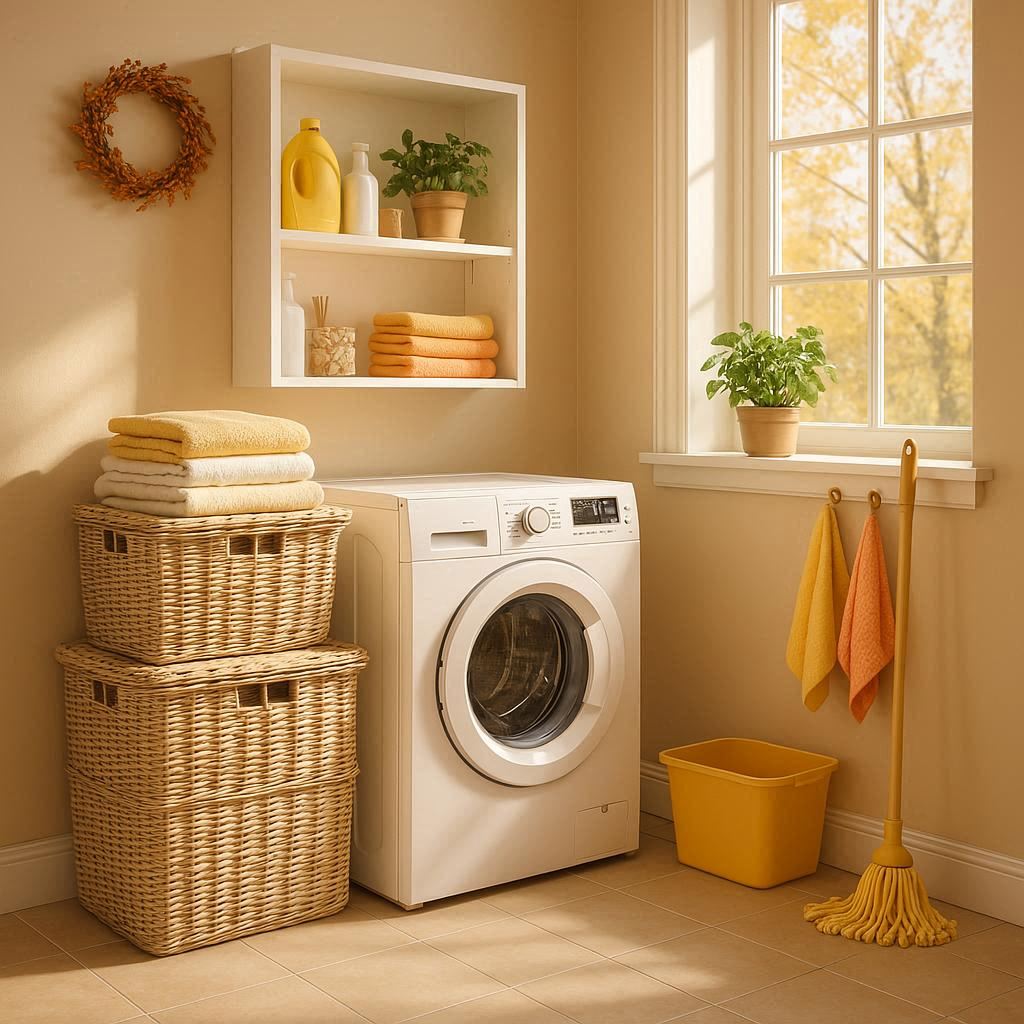
Here are some house cleaning tips.

  • A damp cloth is better at catching dust than a dry one. A dry duster just scatters it around and into the air. It then resettles elsewhere later.
  • A swifter can be used with a dust cloth. Wet the dust cloth and you can dust mop.
  • A mop is good for cleaning the bottom of the bathtub. It can save your back on bending over.
  • If you have to move something more than 1 time per day because it is in the wrong place, and that item needs a new location.
  • Put things back where they belong when you are finished with it.
  • Sort the mail as it comes in. I find it helpful to stand near the trash can.
  • Laundry tips
    • Dawn Dish washing liquid is good as a laundry boaster for greasy and oily stains
    • Peroxide is good for
      • cleaning stains out of underwear
      • removing blood from clothing
      • disinfecting
  • Major dusting should be done about every three months. I personally try to align it with seasonal decoration swapping.
    • It is easier to dust when the stuff has just been put into a container to save until next year.
    • It is more fun when you know that you will get to put out things that has been put up for a while.
  • Basic weekly house cleaning
    • wash the clothes
      • wash at least 1 load of top clothes every week
      • wash at least 1 load of towels every week
      • wash the bedding at least once every two weeks
    • wash the dishes
      • every day
    • clean the counters
      • every day
    • clean the eating area
      • every day
    • take out the trash
      • when needed
    • sweep and mop
      • mopping should be done at least once per week
      • sweeping at least once a week but generally speaking as needed.
    • clean Bathroom
      • once a week

Spicy Corn Sweet Potato Curry Recipe

Ingredients:

  • 2 medium sweet potatoes
  • 2 Tbsp olive oil
  • 1 Tbsp minced ginger
  • 2 cloves garlic, minced
  • 1 Jalapeño pepper, dices
  • 1 can (14.75 oz.) Cream Style Sweet Corn, undrained
  • 1 cup coconut milk
  • 1 Tbsp curry power
  • 1/2 tsp ground coriander
  • 3 cups cooked brown rice

Directions:

  1. Cut potatoes into 1-inch cubes. Combine with oil in skillet and cook 10 minutes on medium heat.
  2. Add ginger, garlic, and jalapeño; cook for an additional 3 minutes.
  3. Stir in corn, coconut milk, curry powder, and coriander.
  4. Bring to boil, then reduce heat, and simmer 5 minutes.
    Serve over rice. Makes 4 servings.

Best Aluminum Foil Alternative for Home Cooking
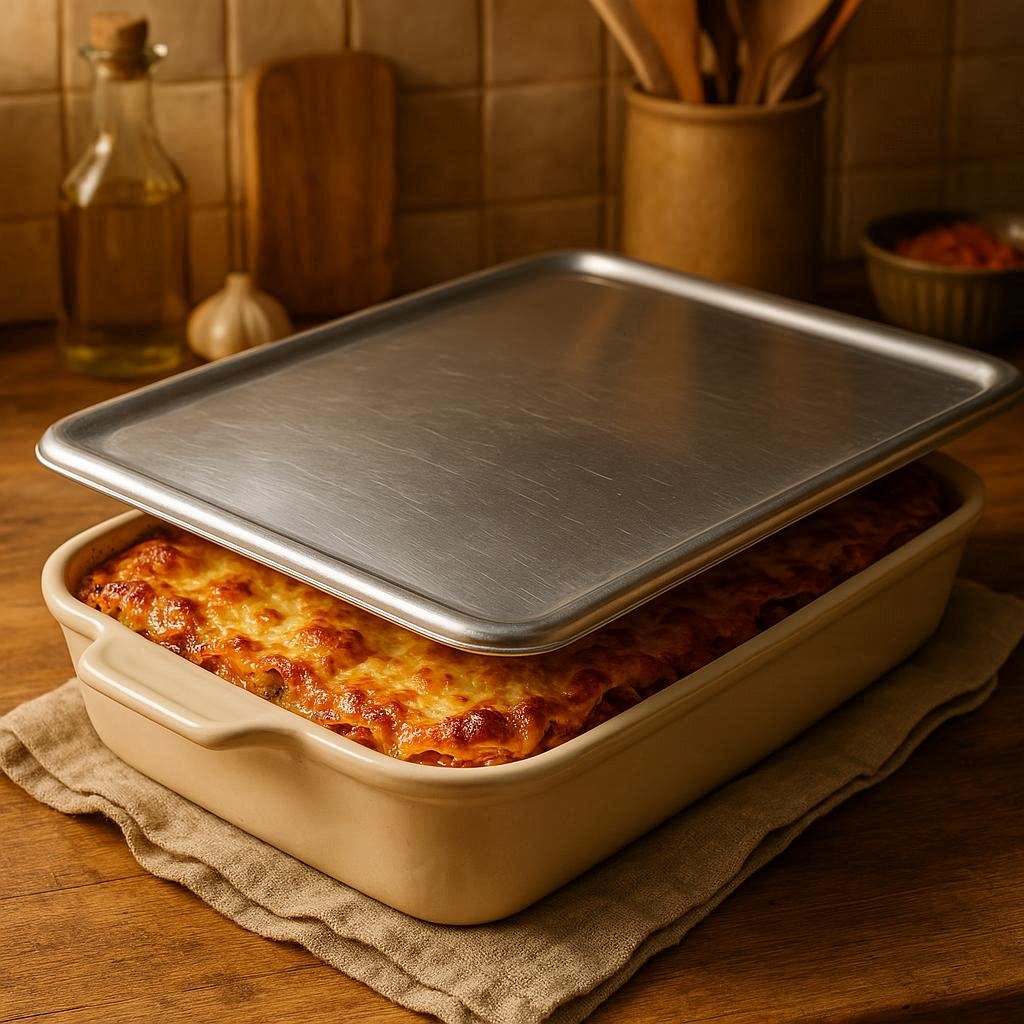
I often come across Facebook posts about cookware to avoid and what to replace it with, sometimes including lists of other kitchen items to stop using. Aluminum foil is often mentioned, but I’ve rarely seen suggestions for alternatives.

A few weeks ago, while making lasagna, I realized I was out of aluminum foil right when it was time to bake. Since lasagna needs to be covered while baking and I didn’t feel like running to the store, I searched my kitchen for a replacement. I spotted a freshly washed cookie sheet in the drying rack, and it fit perfectly over my lasagna pan. I baked it like that, and it turned out great. Since then, I’ve been using a cookie sheet as a cover for dishes that need to go in the oven.

How Much Canned Food from Fresh Produce?
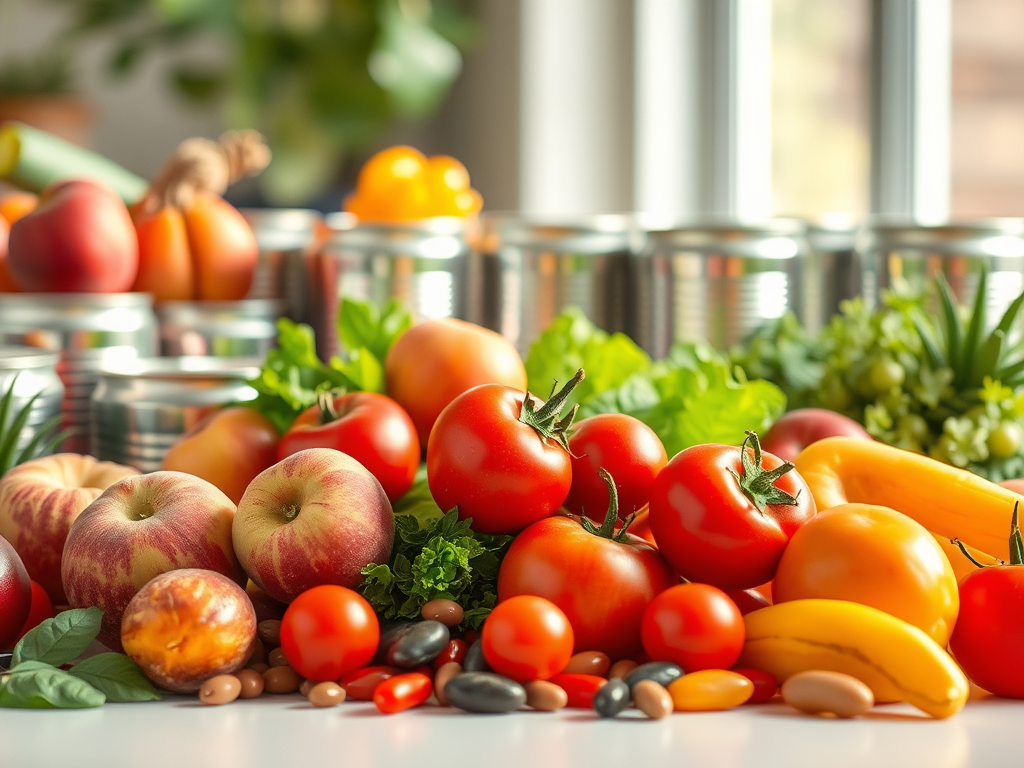
The amount of canned food you can get from a given quantity of produce depends on the quality, maturity, variety, and size of the fruit or vegetable, whether it is whole, in halves, or in slices, or whether it is packed raw or hot. The following charts shows you the approximate yield of canned foods from the given quantities of fruits and vegetables.

Food (Fruit)Amount of FreshAmount Canned
Apples1 bu. (48 lbs.)
2½-3 lbs.
16-20 qts.
1 qt.
Berries,
except strawberries
24-qt. crate
1 1/4-3 lbs.
12-18 qts.
1 qt.
Peaches 1 bu. (48 lbs.)
2-3 lbs.
18-24 qts.
1 qt.
Pears1 bu. (48 lbs.)
2-3 lbs.
18-24 qts.
1 qt.
Plums1 bu. (56 lbs.)
1½-2½ lbs.
24-30 qts.
1 qt.
Tomatoes1 bu. (53 lbs.)
1½-3½ lbs.
15-20 qts.
1 qt.
Food (Vegetables)Amount of FreshAmount Canned
Asparagus1 bu. (45 lbs.)
2½-4½ lbs.
11 qts.
1 qt.
Beans, lima in pods1 bu. (32 lbs.)
3-5 lbs.
6-8 qts.
1 qt.
Beans, snap1 bu. (30 lbs)
1 1/2 – 2 1/2 lbs.
15-20 qts.
1 qts.
beets, without tops1 bu. (53 lbs)
2-3 lbs
17-20 qts.
1 qt
Carrots, without tops1 bu. (50 lbs)
2-3 lbs
16-20 qts.
1 qts.
Corn, sweet, in husks1 bu. (35 lbs)
6-16 ears (3-6 lbs)
8-9 qts.
1 qt
Okra1 bu. (26 lbs)
1-1 1/2 lbs
16 qts.
1 qt.
Peas, green, in pods1 bu. (30 lbs)
3-6 lbs
6-7 qts.
1 qt.
Spinach1 bu. (18 lbs)
2-6 lbs
6-9 qts.
1 qt.
Squash, summer1 bu. (40 lbs)
2-4 lbs
16-20 qts.
1 qt.
Sweet potatoes1 bu. (55 lbs)
2-3 lbs
18-22 qts.
1 qt.


Essential Kitchen Gadgets for Every Home Cook


You can certainly get soup from pot to bowl without a ladle, but it’s amazing how much easier (and neater) the task is with one in hand. That’s the case with most kitchen gadgets. In general, having the right tools can make cooking more efficient and enjoyable.

Cooking Utensils and Gadgets Checklist
Here are some of the most helpful tools for cooking, including substitutions where possible.

  • Bottle/can opener
  • Colander: Use this perforated bowl-shape utensil to rinse food or to drain liquids from solid food.
    • When solids are fine, use a fine-mesh sieve.
  • Cutting boards: Stock up on two.
    • Reserve one solely for raw meat, poultry, fish, and shellfish, and the other for ready-to-eat foods.
  • Egg separator: Use to separate egg yolks from whites.
    Separating eggs by passing the yolk from shell to shell can spread any harmful bacteria that may be present.
  • Fork- long handled: Use when carving or moving large pieces of food, such as roasts.
  • Funnel: Helps avoid spills when pouring an ingredient from one container to another.
  • Grater: This metal tool generally has a surface punched with small, sharp-edged holes or slits that are used to break foods into smaller pieces.
    • Those with large holes are sometimes called shredders, while those with the largest holes are sometimes called slicers.
    • Box graters have different-size holes or slits on each side. The size of the holes or slits determines the task for which the grater is best suited. The smaller the holes or slits, the finer the resulting food pieces.
  • Kitchen shears: Use for snipping everything from fresh herbs to kitchen string.
  • Ladle: In a pinch, substitute a heatproof cup.
  • Measuring cups and spoons
  • Mixing bowls: For most cooks, a set of four mixing bowls in the following sizes will suffice: small (1-quart), medium (1½-quart), large (2½-quart), and extra-large
  • Pastry blender: For cutting fat (such as shortening) into flour to make baked goods. If you don’t have one, use two knives in a crisscross motion.
  • Pastry brush: Use for brushing glazes over baked goods and for greasing pans.
  • Pepper grinder: Use when you desire the more flavorful freshly ground pepper.
  • Rolling pin: A clean, heavy bottle with smooth sides can be used instead.
  • Rubber scraper: Use these utensils, also known as rubber spatulas, for scraping batter from a bowl and for folding ingredients together.
  • Sieves: Use these circular wire-mesh utensils, also called strainers, to separate small particles from large ones. Stock up on one large and one small.
  • Sifter: If you don’t have one, pour flour or powdered sugar into a sieve set over a bowl, then stir it to force the grains through the wire mesh.
  • Skewers: These thin, pointed sticks are made of metal or wood and are used to hold pieces of meat, fruit, and vegetables.
    • To use wooden skewers for grilling or broiling, be sure to first soak them in water for at least 30 minutes to prevent them from burning.
  • Slotted spoon, long-handled: Useful for removing solids from liquid mixtures.
  • Spatulas: These flat utensils can be made of metal, rubber, plastic, and wood. A metal turner- type spatula is used for flipping foods; a narrow, flexible metal spatula works well for spreading.
    • Rubber or plastic spatulas also are called rubber scrapers
    • When using a spatula for cooking on the range top, make sure the one you use is heatproof; metal or silicone is a good choice.
  • Spoon, long-handled: These work well for stirring large volumes.
  • Thermometers: Click here.
  • Timer: A digital timer can help you time cooking steps to the second.
  • Tongs (metal or with nylon grippers): Use to lift and turn foods.
  • Vegetable brush: Useful for scrubbing fruits and vegetables when skins will not be removed.
  • Vegetable peeler: Essential for peeling vegetables; in a pinch, peel skins with a paring knife.
  • Wire cooling rack: Allows air to circulate around baked goods to cool them quickly and keep them from getting soggy.
  • Wire whisks: These come in handy for beating eggs and other ingredients.
    • They also can help you smooth out lumpy sauces.
  • Wooden spoons (assorted sizes): These sturdy tools are useful for stirring thick dough and batter. Because wooden handles stay cool longer than metal handles, they are a good choice for stirring mixture while they heat.

Other Useful Gadgets
These tools are not essential for everyday cooking, but the more you cook, the more you’ll enjoy having them on hand.

  • Cheese slicer
  • Citrus juicer/reamer
  • Citrus zester
  • Meat mallet
  • Mortar and pestle
  • Parchment paper
  • Pastry bag with tips
  • Pizza cutter
  • Pizza stone
  • Potato masher
  • Salad spinner
  • Corkscrew: With many models available, choose the type you’re comfortable using.
  • Food mill: If you don’t have one, force food through a strainer set over a bowl or pan.

Kitchen Thermometers

Kitchen thermometers help ensure that food are cooked to safe internal temperatures and are stored at proper temperatures. There are many types of thermometers that can be used.

Appliance Thermometers

  • Oven thermometer: This lets you check the accuracy of your oven’s temperature.
  • Refrigerator/freezer thermometer: This verifies whether the appliance is chilling correctly.
    • For food safety, refrigerators should maintain a temperature of no higher than 40°F, and freezers should maintain a temperature of 0°F or less.

Food Thermometers

  • Candy/deep-frying thermometer: These thermometers can safely measure extra-high temperatures. They are marked with candy making stages and for deep in frying.
  • Disposable temperature indicator:
    • This single use thermometer, designed for specific temperature ranges, has a sensor that changes when the when the appropriate temperature is reached.
    • Follow the manufacturer’s directions and use it for the food for which it is designed.
  • Electronic oven cord thermometer: Best for roasts or large cuts of meats.
    • This thermometer features a probe designed to stay in the meat as it cooks.
    • A stay cool cord aches to a magnet-backed unit attaches to the oven door.
    • An alarm sounds when the food reaches the desired temperature.
    • Though designed for oven use, it also can be used to check food cooking on the stove top.
  • Fork thermometer: Handy for grill.
    • This thermometer can be used for most foods
    • To ensure an accurate reading, be sure that the tine of the fork containing the sensor is fully inserted. Do not leave it in food while the food is cooking
  • Instant-read thermometer: It gives an internal reading in seconds.
    • The sensor in a digital instant-read thermometer is in the tip.
    • Use this type to verify internal temperatures of thin or thick foods. The sensor of a dial instant-read thermometer is in the stem, not the tip, so the stem must be inserted at least 2 inches into the food you are testing for an accurate reading.
    • For thinner cuts, you may need to insert the thermometer sideways into the food.
    • Do not leave the thermometer in food while the food is cooking.
  • Meat thermometer: Typically used to check the internal temperature of large cuts of meats, such as roasts and whole poultry, it generally is not appropriate for thin foods.
    • An oven-safe meat thermometer may be left in a conventional oven but not in a microwave oven.
  • Pop-up thermometer: Sometimes turkey or other meat comes with an embedded thermometer that pops up when the food is done.
    • Even when such a device is present. the food should be tested with a reliable food thermometer to ensure that it reaches the proper temperatures for safety and doneness.

Temperature and Safety

  • Cooking foods to their proper temperatures is about maximizing flavor, texture, and safety.
  • Always use a thermometer to determine if something is done. Never just guess by looking at it or by the amount of time it has spent in the oven or on the grill.

Specialty pans

Specialty Pans
While not essential, these specialty pans offer features that make it easier to prepare specific foods.

  • Griddle: This flat, often rimless pan makes flipping pancakes a cinch. A nonstick griddle also helps you cook with a minimum amount of fat.
  • Grill pan: The grooves of this heavy, stove-top, griddle-type pan allow fat to drain away from
    food and add appetizing grill marks to the cooked items.
  • Omelet pan: Sloped sides and a nonstick surface make it easy to fold and slide omelets from the
    pan onto the plate.
  • Wok: Available with a rounded or flat bottom, this pan offers deep, sloping sides that help keep
    food pieces in the pan when stir-frying.

About Nonstick Pans
Choose moderately priced, fairly heavy nonstick pans. With proper care and by using heat-proof spatulas and wooden spoons, these pans can last three to five years before needing replacement. However, I don’t recommend them, as scratches in the nonstick coating can release toxic fumes into the air.

Baking Pans and Dishes
For our purposes, a baking pan refers to a metal container, and a baking dish refers to an oven-safe glass or ceramic container. (If substituting glass or ceramic cookware for recipes that call for baking pans, reduce baking temperature by about 25°F.)

Baking Pans (Metal)

  • Use for nicely browned baked goods.
  • Use for broiling. Do not use glass dishes or casseroles when broiling because the high temperatures may cause the glass to shatter.

Baking Dishes (Glass or Ceramic)

  • Use for dishes made with eggs or with acidic ingredients such as tomatoes and lemon. Baking pans made of aluminum, iron, and tin can react with these foods, causing the foods to discolor.

Ovenware Checklist
With these ovenware pieces in your kitchen, you’ll be able to make almost any baked good you desire. If you are on a budget, many of these can be used as substitutes for the rest. Think about what you would be cooking the most. Then think about how those might be used as a substitute for the rest. A few can’t be substituted. If you really want to cook those items, save up and get a good one.

  • Baking dishes (glass), rectangular:
    • One 2-quart (12x72x2-inch)
    • One 3-quart (13x9x2-inch).
  • Baking dish (glass), square:
    • One 2-quart (8x8x2-inch).
  • Baking pans (metal):
    • One 9x9x2-inch
    • One 13x9x2-inch
    • One 15x10x1-inch (jellyroll).
  • Cake pans (metal):
    • Two round 8×12- or 9×1½-inch; those with 2-inch-deep sides also
      will suffice.
  • Cookie sheets (metal):
    • At least two with either no sides or low sides; in a pinch, substitute a 15x10x1-inch (jelly-roll) baking pan, though its rims may inhibit even browning.
  • Covered casseroles:
    • Several round, deep, glass, various sizes (1-, 2-, and 3-quart). If a recipe calls for a covered casserole and you do not have a lid, use foil to cover.
  • Custard cups:
    • Six round, glass, 6-ounce.
      • Use them for cooking custards and other individual desserts and when measuring and preparing small amounts of ingredients, such as garlic, in advance so that the ingredients are ready when you need them in a recipe.
  • Loaf pans (metal) or dishes (glass):
    • Several 72x32x2-inch, 8×4×2-inch, or 9×5×3-inch.
  • Muffin pan:
    • One pan with twelve 21/2-inch cups or one or two pans with twelve 1/4-inch cups.
  • Pie plate (glass) or pan (metal):
    • One round 9-inch.
  • Pizza pan (metal):
    • One round 12- to 14-inch; in a pinch, substitute a baking sheet, but build up the pizza crust edges to hold toppings.
  • Roasting pan with rack:
    • One large enough to accommodate a roast yet fit in your oven.
    • A rack helps promote even cooking and prevents the roast from stewing in the pan juices.
  • Soufflé dish:
    • One round, glass, 1½-quart; in a pinch, substitute a straight-sided casserole with the same volume

Specialty Bakeware
Some desserts require specific bakeware.

  • Fluted tube pan: Fluted sides bring a decorative look to cakes. This pan comes in various sizes, with a 10-inch, 12-cup being the most common.
  • Springform pan: The pan bottom is separate from the pan sides. A clamp holds the two parts together and opens to allow the sides to be pulled away from the baked dessert.
    • Use this round pan for making cheesecakes and other desserts that are tricky to remove from their pans.
    • The 8- and 9-inch sizes are most common; 10- and 11-inch pans also are available.
  • Tart pan with removable bottom: A removable bottom makes it easy to neatly transfer a tart to a serving plate.
    • Pans come in 9- to 11-inch sizes. (Shallow quiche or flan pans are one piece, without removable bottoms.)
  • Tube pan: This deep pan, also known as an angel food cake pan, has a hollow center tube that promotes even baking.
    • Most tube pans have removable bottoms.
    • A 10-inch pan is a common size.

Essential Cookware Checklist for Every Kitchen

Pots and pans come in a variety of materials. Aluminum and copper are top-notch heat conductors, but all-copper pans can be pricey and tarnish easily, while plain aluminum pans may react with certain foods. Great choices for home cooks include heavy stainless-steel pans with copper bottoms, pans with aluminum layers sandwiched between stainless steel, and aluminum pans treated through hard anodization. This process makes them noncorrosive and great at conducting heat. Heavy pans like these, along with enameled cast iron, are often recommended for their ability to heat food evenly.

Range-Top Cookware Checklist
Commonly used cookware includes pans of different sizes, shapes, and functions.

  • Double boiler: Two pans work together, with one fitting into the other. Water in the bottom pan
    simmers gently to cook the contents in the top pan. You can substitute a metal or heat-resistant glass bowl and a saucepan. The bowl should fit in the pan but not touch the simmering water.
  • Dutch oven or kettle: The large, heavy pot has a tight-fitting lid and two handles. It is used for
    soups, stews, and braising meats. A kettle often
    is used in canning.
  • Saucepans: These versatile pans come in many sizes, including 1½, 2, and 3 quarts. It’s helpful to have several different sizes.
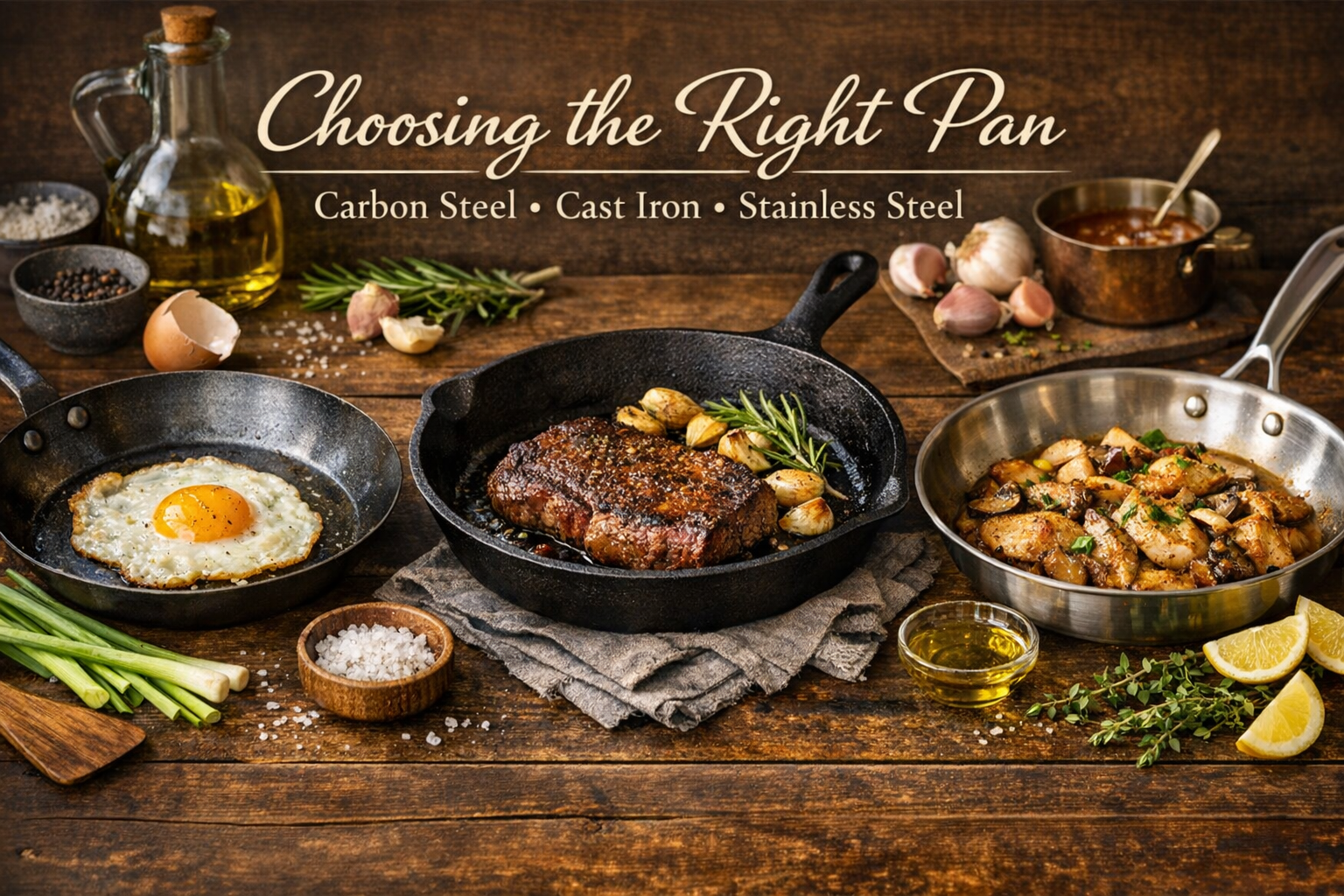
  • Skillets: This long-handled, low-sided pan sometimes is referred to as a frying pan. Its sides often slope to allow for better evaporation of liquids. Large (10-inch) and very large (12-inch) skillets are most useful. A 10-inch nonstick skillet also comes in handy. Other sizes include small (6-inch) and medium (8-inch). If you want to use a skillet in the oven, wrap the handle in a couple of layers of heavy-duty foil or purchase a skillet with an oven-going or removable handle.
  • Vegetable steamer (collapsible or insert): The perforated basket holds food over boiling water in a pan to steam it rather than boil it.