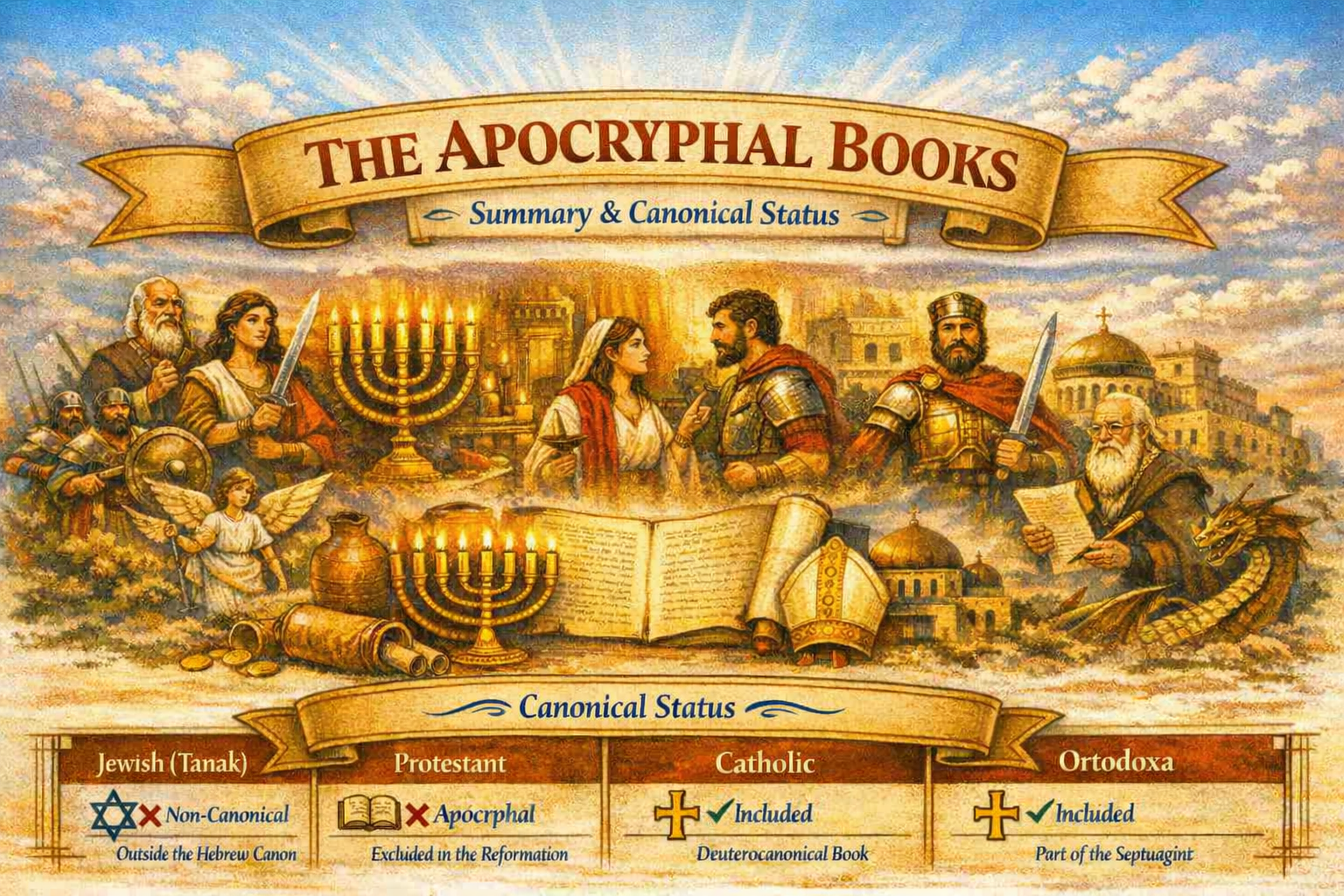
📘 What Are the Apocrypha?
Exploring the “hidden books” of Scripture
1. What Does “Apocrypha” Mean?
The word Apocrypha comes from Greek, meaning “hidden” or “obscure.”
It refers to biblical-style books written between the Old and New Testaments (c. 200 BCE – 100 CE) that were:
- Included in some Bibles (Catholic, Orthodox)
- Excluded from others (Jewish, Protestant)
- Valued for history, devotion, and wisdom
2. Why Are They Controversial?
Different traditions made different decisions:
| Tradition | Apocrypha Status | Reason |
|---|---|---|
| Jewish (Tanakh) | ❌ Not Canon | Not in final Hebrew Bible |
| Protestant | ❌ Apocrypha | Excluded at Reformation |
| Catholic | ✔️ Deuterocanonical | Affirmed at Council of Trent |
| Orthodox | ✔️ Canonical | Part of Septuagint tradition |
3. The Deuterocanonical Books (Catholic & Orthodox)
These are included in Catholic Bibles and most Orthodox Bibles:
| Book | Chapters | Theme |
|---|---|---|
| Tobit | 14 | Angelic guidance, healing, marriage |
| Judith | 16 | Courage, deliverance, faith |
| Wisdom of Solomon | 19 | Divine wisdom, immortality |
| Sirach (Ecclesiasticus) | 51 | Practical wisdom, ethics |
| Baruch | 5 | Exile, repentance, hope |
| Letter of Jeremiah | 1 | Warning against idolatry |
| 1 Maccabees | 16 | Jewish revolt, Hanukkah |
| 2 Maccabees | 15 | Martyrdom, resurrection |
| Additions to Esther | 6 | Prayers and visions |
| Additions to Daniel | 3 | Susanna, Bel & the Dragon, Song of the Three |
4. Additional Orthodox Books
These appear in Eastern Orthodox Bibles:
| Book | Theme |
|---|---|
| 3 Maccabees | Jewish persecution in Egypt |
| 4 Maccabees | Philosophical reflections on martyrdom |
| 1 Esdras | Alternate version of Ezra |
| Prayer of Manasseh | Repentance of King Manasseh |
| Psalm 151 | Extra psalm attributed to David |
| Odes | Liturgical hymns including Prayer of Azariah |
5. Other Apocryphal Texts (Not Canonical)
These are never included in official canons, but are studied for insight:
| Book | Type |
|---|---|
| Book of Enoch | Prophetic visions, angels |
| Jubilees | Rewritten Genesis |
| Gospel of Thomas | Sayings of Jesus (Gnostic) |
| Didache | Early Christian teaching |
| Testaments of the Twelve Patriarchs | Ethical reflections |
| Letter of Aristeas | Origins of the Septuagint |
| Psalms & Odes of Solomon | Devotional poetry |
| 2 Esdras (Latin Ezra) | Apocalyptic visions |
6. Why Study the Apocrypha?
Even if not considered inspired by all traditions, these books:
- Bridge the gap between Old and New Testaments
- Reveal Jewish faith under persecution
- Show early Christian use of the Septuagint
- Offer wisdom and devotion for reflection
However, if you choose to read these books, read with great care.
7. Scripture Notes
- “Whatsoever things were written aforetime were written for our learning…” — Romans 15:4
- “Prove all things; hold fast that which is good.” — 1 Thessalonians 5:21
8. Outlines and Notes about the books
- Understanding the Book of 1 Esdras: A Historical Overview
- Exploring the Book of 2 Esdras: Themes and Canonical Status
- Comparison of 2 Esdras with Biblical Apocalyptic Books
- Understanding the Book of Tobit: A Canonical Analysis
- Understanding the Book of Judith: A Canonical Analysis
- Additions to Esther
- The Book of Wisdom: Bridging Hebrew and Greek Thought
- Ecclesiasticus
- Baruch
- The Prayer of Azariah
- Susanna
- Beland the Dragon
- The Prayer of Manasseh
- Understanding the Book of 1 Maccabees: Themes and Canon Status
- 2 Maccabees
